
10 October 2026
How Much Do Commercial Solar Panels Cost In Manchester?
What commercial solar panels cost in Manchester, using official DESNZ figures: what pushes the price up, how payback works here, and the tax reliefs.
Commercial solar is one of the few capital projects a finance director can price with official data before ringing anyone. The government’s own figures for 2025/26 put 10-50kW installations in the North West at a mean of £1,248 per kW, and business electricity in the 20-499 MWh band averaged 29.1p per kWh across 2025. Put those beside the roughly 900 kWh a south-facing kilowatt of panels makes each year in Trafford Park and you have the bones of a business case. The bones, though, not the whole thing. On a Manchester factory or warehouse the quote is shaped as much by the roof, the scaffold and the grid connection as by the panels. This guide sets out what commercial solar panels cost in Manchester, which parts of the job move the number, and how to judge whether the payback works for your site.
What the official figures say commercial solar costs
The Department for Energy Security and Net Zero publishes cost data built from MCS installation records. For 2025/26, installations of 10-50kW across Great Britain came in at a median of £1,204 per kW and a mean of £1,267. Narrow it to non-domestic installs of that size and the mean was £1,167 per kW, across 5,163 systems. In the North West the 10-50kW mean was £1,248 per kW from 1,168 installs.
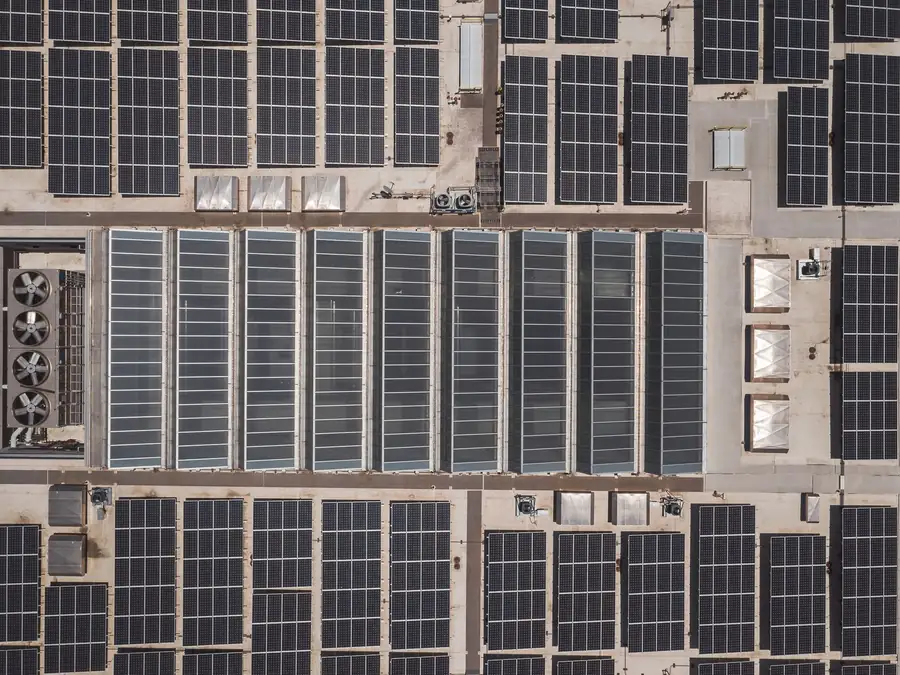
Those figures include equipment, installation and grid connection, plus VAT where it applied. They don’t include batteries. So a 40kW array at roughly £1,200 to £1,250 per kW works out at around £48,000 to £50,000. Treat that as a sense check, not a quote.
The dataset has a hard ceiling. MCS covers solar PV up to 50kWp, so the government’s dataset stops there. Many factory and distribution roofs around Greater Manchester carry systems far larger than that, and there is no official per-kW figure for them. If you want to see how we scope those bigger roofs, our page on commercial solar panels for Manchester businesses covers the survey and design stage.
Why the price per kW falls as the array gets bigger
Plenty of a solar quote is fixed cost. The site survey, the design work, the grid application, getting people and kit onto the roof, commissioning and handover all cost roughly the same whether you fit 40 panels or 400. Spread over more kilowatts, they shrink per unit.
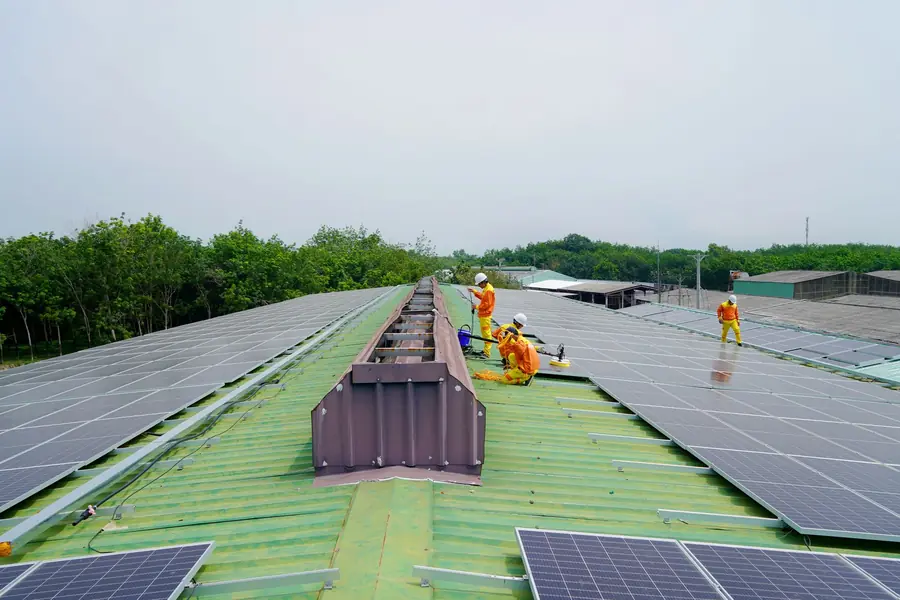
DESNZ’s data shows the effect clearly even within small systems. The 10-50kW median sits about a quarter below the 0-4kW median, and after inflation the 10-50kW median fell a further 4% on the year before. Above 50kW we’d expect the per-kW price to keep easing with scale, but there’s no published number to quote, and we won’t invent one.
The practical point for a business is simple. Fitting half a roof now and the other half later usually costs more in total than doing it once. If your demand justifies the bigger array, a single phase of work tends to be the cheaper route.
Your roof can cost more than the panels
This is the line on a quote that surprises people. A modern clad portal-frame shed on one of the newer Trafford Park or Salford schemes may need nothing more than a structural check and the right fixings. An older shed with fibre-cement or asbestos-cement sheets is a different job.
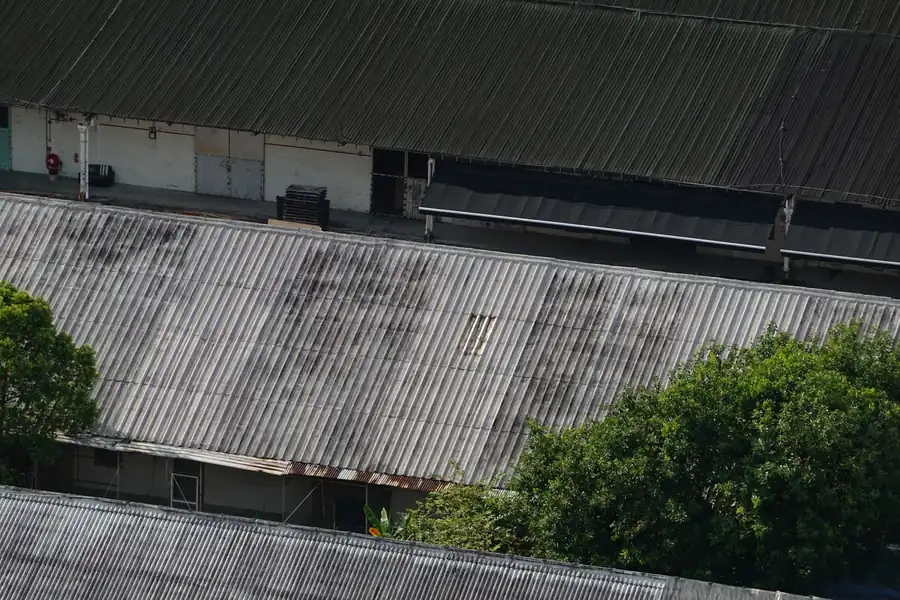
HSE’s numbers explain why. Falls through fragile surfaces, particularly fibre-cement roofs and rooflights, account for 22% of fall-from-height deaths in construction. HSE’s advice is to treat every roof as fragile until a competent person says otherwise. That means staging, edge protection and safety netting, all of which go on the bill.
Asbestos-cement roofs add their own rules. Most work on them is non-licensed if the sheets aren’t substantially broken up, but heavier disturbance becomes notifiable non-licensed work. In practice, many owners choose to over-clad or replace an old asbestos roof before fitting panels, because there is little sense in bolting 25 years of generation onto a roof with ten years left in it. That decision can cost more than the solar itself.
Then there’s loading. Panels, rails and any ballast add weight to purlins that were sized decades ago for snow and wind, not for a power station. A structural engineer has to sign the roof off, and if steelwork needs strengthening, that goes into the price too.
Access, scaffold and working around a live site
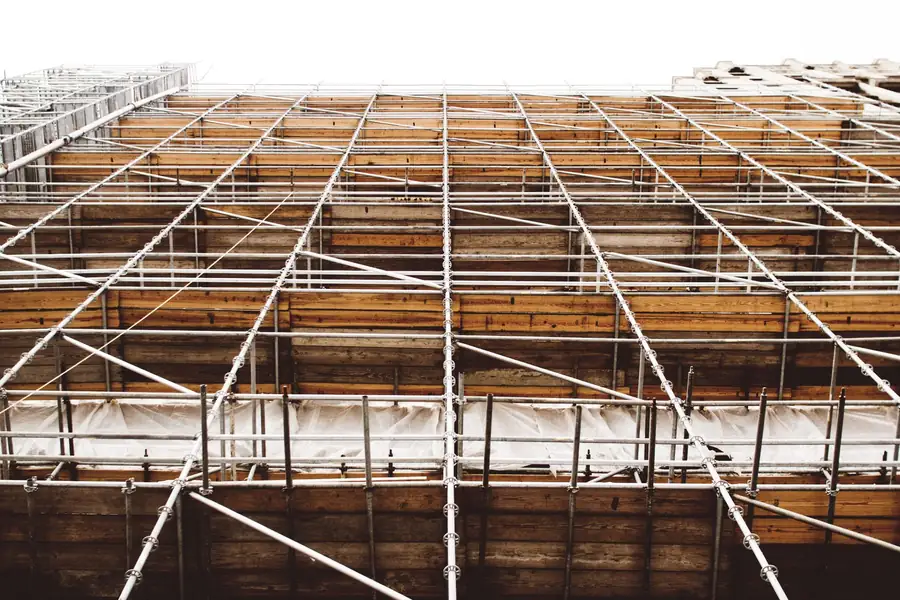
Getting onto a commercial roof safely is rarely cheap. Scaffold towers, edge protection along the eaves, a hoist or crane for lifting pallets of panels, and sometimes a mobile elevating work platform all appear as separate lines.
Your site’s daily routine affects the cost as well. A distribution shed with lorries backing onto the dock all day needs an exclusion zone that doesn’t block the yard. A food plant may want work kept clear of production areas at particular hours. Each of those constraints adds time, and time is the biggest variable in labour cost.
Bigger jobs also bring paperwork under the Construction (Design and Management) Regulations 2015. A project must be notified to HSE if it runs past 30 working days with more than 20 people on site at once, or exceeds 500 person-days. As the client, your business carries legal duties under CDM whatever the size of the job, so expect your installer to ask for information about the building, including any asbestos survey.
Grid connection: G99 and export limits
Every commercial array connects to SP Electricity North West’s network, the distribution operator for Greater Manchester (it traded as Electricity North West until August 2025). Anything above 16A per phase, which covers almost every business system, needs a G99 application before it connects. The operator’s guidance on connecting solar and storage under G98 and G99 sets out the forms and thresholds.
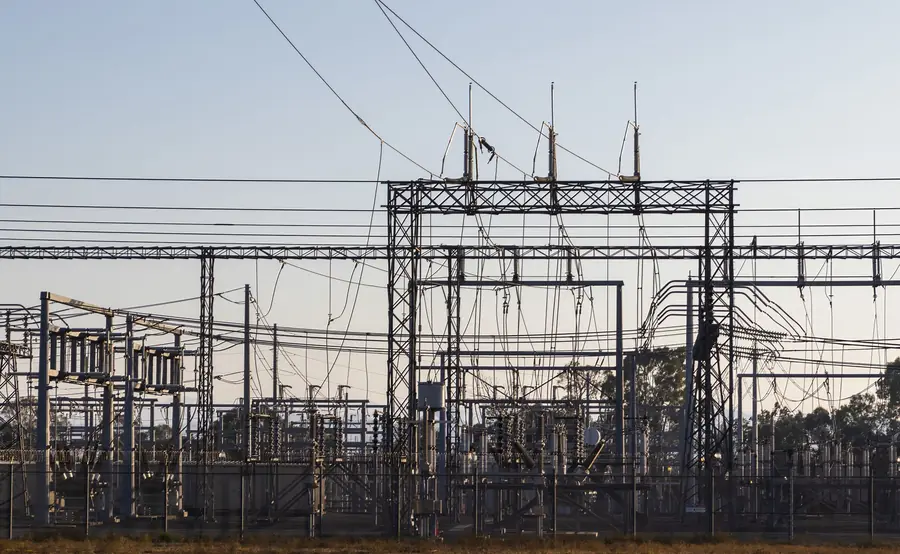
A few thresholds affect cost. Systems above 50kW need a G5 harmonic assessment. At 150kW and above, Part 4 of the G99 form has to be completed when the application goes in. The network operator then has a set time to quote: 45 working days where the works are at low voltage and 65 where they reach high voltage. We haven’t found a published fee for G99 applications on this network, so we price it per site.
If the local network can’t take everything your array could export, the operator may offer an export limit rather than costly reinforcement. The limit is written into your connection agreement and enforced by equipment that throttles the inverters. That can be perfectly workable for a site that uses most of its power during the day. It does change the sums, though, because any generation above the limit that you can’t use is simply lost, unless a battery stores it.
Payback: Manchester sunshine against your unit rate
Manchester’s rainy reputation is louder than its weather. The Met Office’s 1991-2020 averages for Woodford, the nearest climate station to south Manchester, show 1,385 hours of sunshine a year against a UK average of 1,403. PVGIS, the European Commission’s solar yield tool, gives about 900 kWh per kW per year for a south-facing array at 35 degrees in Trafford Park, and about 818 kWh for a low-tilt, flat-roof layout at 10 degrees.
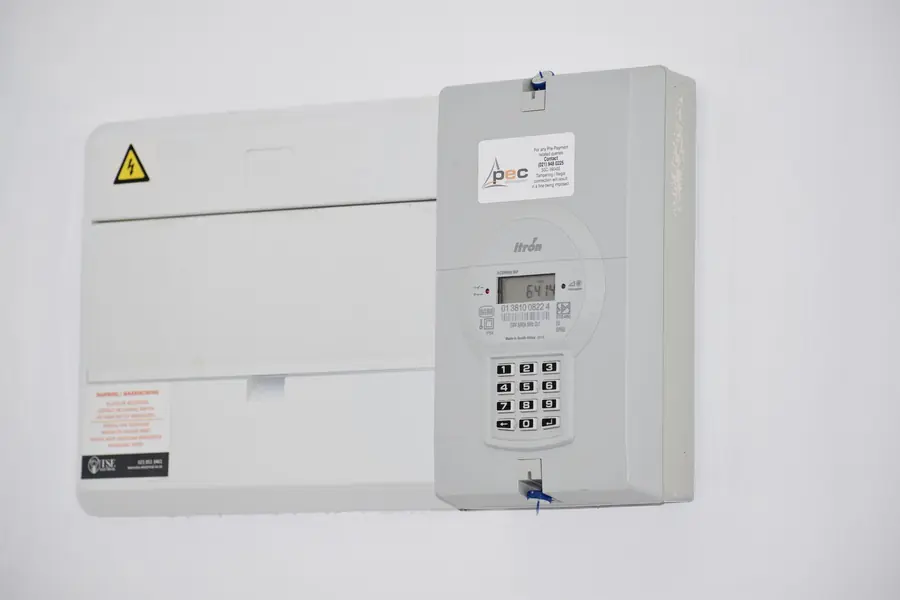
The other half of the sum is what you pay for power. According to DESNZ’s non-domestic energy price statistics, 2025 averages including Climate Change Levy ran from 34.9p per kWh for the smallest users down to 25.9p for medium consumers using 2,000-19,999 MWh a year. Provisional figures for the second quarter of 2026 are similar. For comparison, the all-business average in 2020 was 13.8p.
Here’s a rough worked example, and it is only that. A 40kW flat-roof array at 818 kWh per kW makes around 32,700 kWh a year. If every unit replaces grid power at 28p, that’s about £9,200 a year against a cost of £48,000 to £50,000, so a simple payback of a little over five years. Real life chips at that. Your actual saving depends on your marginal unit rate rather than the headline average, panels lose roughly half a percent of output a year, and some generation will spill out at weekends or on shutdown days.
Why export income is a bonus, not a plan
The Smart Export Guarantee is only mandatory for suppliers with 150,000 or more domestic customers. Suppliers that mainly serve businesses don’t have to offer it, though some choose to. You’d also need a half-hourly meter with an export MPAN. We’d always size a business array around daytime consumption first. Whatever you export after that is a welcome extra, but the case shouldn’t lean on it.
Tax, VAT and business rates
The tax side often does more for the payback than any choice of panel. HMRC’s capital allowances manual confirms that solar panels are special rate expenditure. For a company, that means the permanent 50% first-year allowance for special rate assets rather than 100% full expensing.

The Annual Investment Allowance is the other route. It’s £1 million a year and covers most plant and machinery, which is why many businesses use it for solar projects under that figure. Which allowance suits you depends on your other spending and your tax position, so it’s one for your accountant rather than your installer.
On VAT, commercial solar is standard-rated at 20%. The zero rate on energy-saving materials only applies to homes and to buildings used solely for a relevant charitable purpose. Most VAT-registered businesses reclaim it, so for them the cost that matters is the net figure.
Business rates are kinder than many expect. In England, plant and machinery used for onsite renewable generation, and storage used with it, is exempt from business rates from 1 April 2022 until 31 March 2035. Fitting panels shouldn’t increase your rateable value during that window. And each kWh your array makes and you use on site is one you’re not paying the Climate Change Levy on, which stands at 0.801p per kWh from April 2026.
Our commercial solar panel cost guide puts all of these figures in one place, with the generation and unit-price tables side by side. If you’d like a figure for your own roof, rather than one for an average roof, we’ll start with your half-hourly data and a survey. Get a free quote for commercial solar in Manchester
Frequently asked questions
How much does a 40kW commercial solar system cost in Manchester?
As a rough guide, around £48,000 to £50,000. That comes from the government's 2025/26 cost data, where 10-50kW systems averaged about £1,200 to £1,250 per kW. Roof condition, access and the grid connection can move a real quote either way.
What is the payback on commercial solar in Greater Manchester?
It depends mostly on how much of the output you use on site and what you pay per unit. A south-facing array in Trafford Park produces roughly 820 to 900 kWh per kW installed each year, and business electricity averaged between about 21p and 35p per kWh in 2025, depending on how much a site uses. Sites that use most of their generation during the day see the quickest returns.
Can my business claim capital allowances on solar panels?
Yes. HMRC treats solar panels as special rate expenditure. Companies can claim the 50% first-year allowance for special rate assets, and the £1 million Annual Investment Allowance covers most plant and machinery. Your accountant should confirm which route suits your accounts.
Will I get paid for the solar electricity my business exports?
Not automatically. Suppliers that mainly serve business customers aren't obliged to offer the Smart Export Guarantee, although some do. Export also needs a half-hourly meter with an export MPAN. It's safer to size the system around what you'll use on site and treat export income as a bonus.
Thinking about solar or a battery for your site?
Send us a year of half-hourly data and we'll tell you, in writing, what size of system makes sense and roughly what it would save. Manchester, Salford, Trafford, Bolton, Wigan and in between.