Commercial Solar Panels In Wigan

Is your Wigan warehouse roof bigger than the load underneath it?

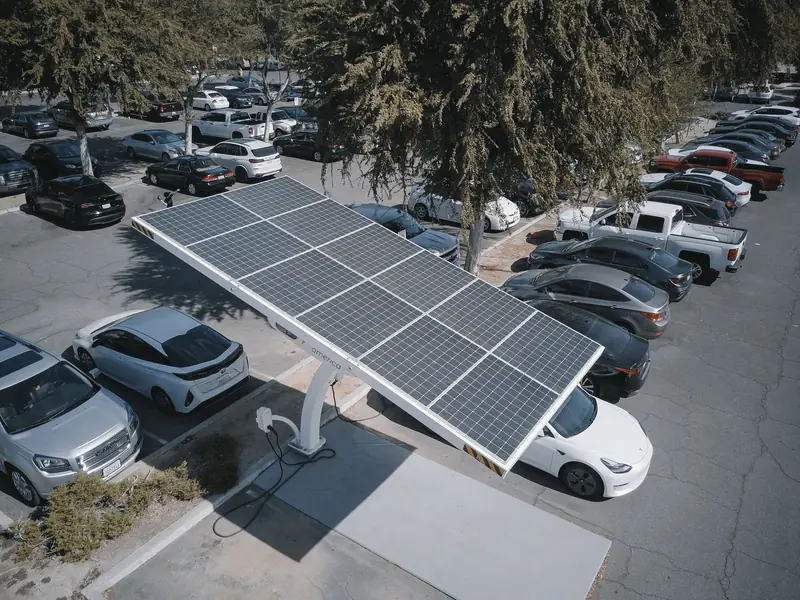
Rooftop solar PV, battery storage and car park canopies for distribution sheds, food plants and trade units along the M6 through Wigan

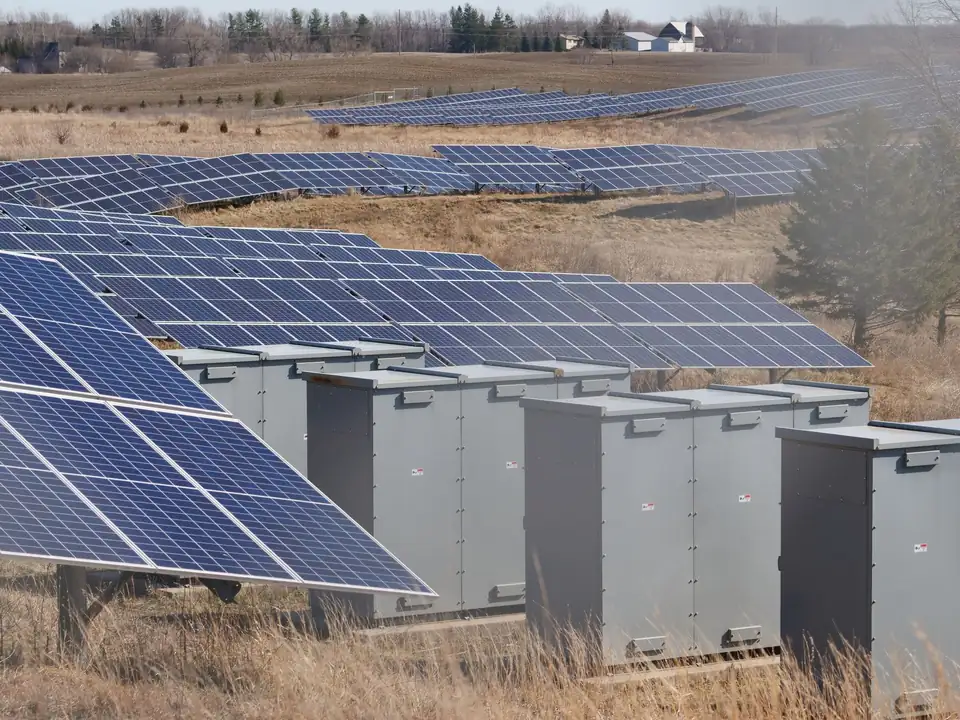
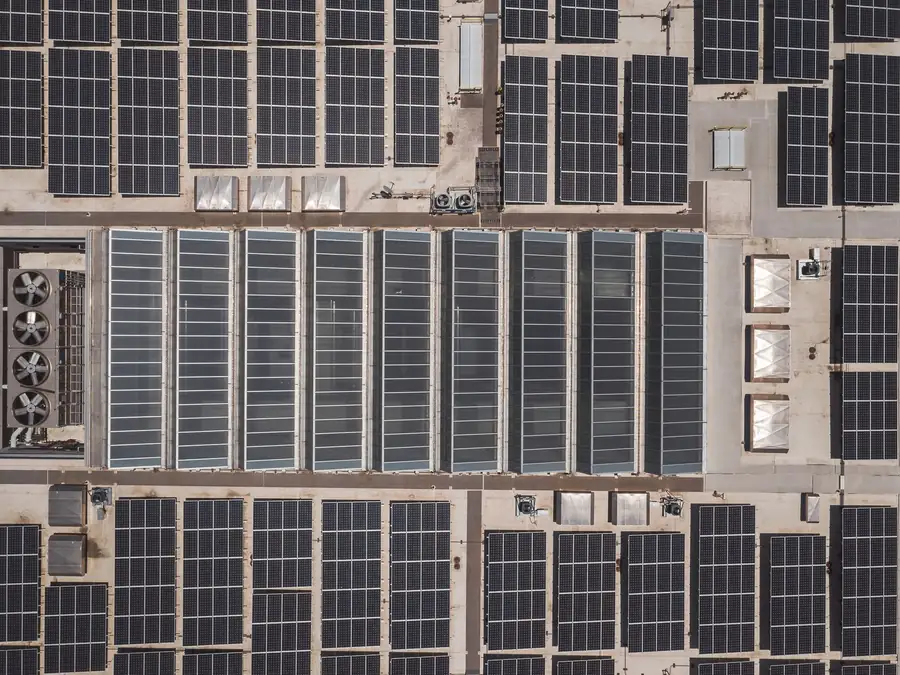
Commercial solar panels in Wigan tend to go on one particular kind of building: a wide portal-frame shed a mile or two off the M6, with acres of roof and a fairly modest daytime load of lighting, dock doors and truck chargers. That mismatch is the whole design problem. Cover the roof edge to edge and a bright Sunday in June will push far more power at the grid than SP Electricity North West may be willing to take, so the export figure in your connection offer often sets the array size, not the roof. We start from your half-hourly data and work outwards: what you use, when you use it, what the network will accept, and whether a battery earns its place by soaking up the surplus. The answer is sometimes a smaller array than you expected. It is rarely a bad one.

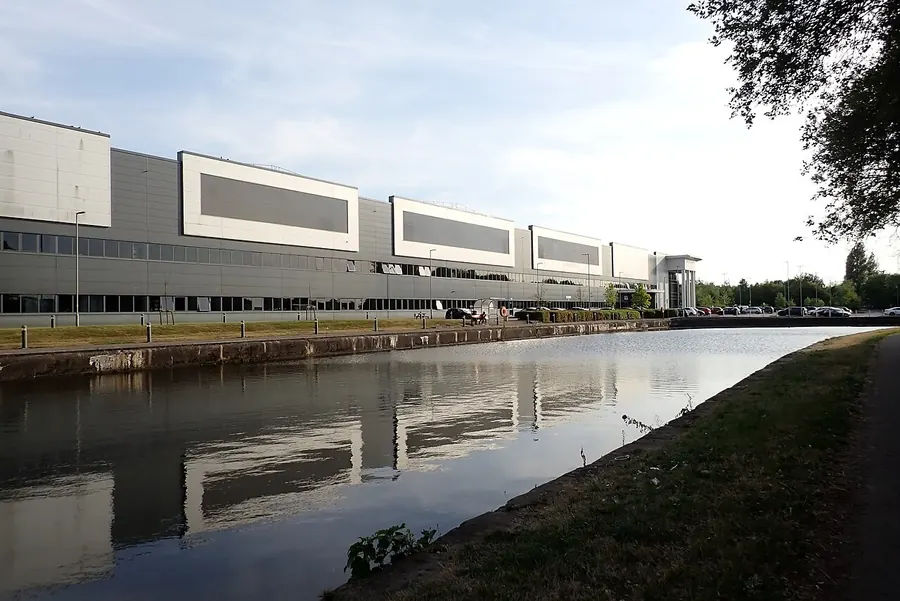
Large distribution buildings at Westwood Park beside the Leeds and Liverpool Canal, Wigan
Photo: DS Pugh, Wikimedia Commons, CC BY-SA 2.0

Free Solar Survey In Wigan

We reply within one working day to book a site visit.

No charge for the survey or the proposal. Your details are only used to reply to you - see the privacy policy.

About Wigan

Wigan's employment land, from J25 to the canal

Most of the borough's big roofs sit in a band along the motorway. Martland Park, about a mile from the M6, is Wigan's largest employment area at a little over 100 hectares, and it runs from starter units up to large distribution sheds, with the Heinz complex at Kitt Green alongside. Heinz opened there in 1959 on 55 acres, and the plant is described as one of the largest food factories in Europe. South-east of the town centre, Westwood Park is a 58-acre brownfield site between junctions 25 and 26, with the Leeds and Liverpool Canal along its northern side. Wheatlea, off the A49 at Marus Bridge, is half a mile from J25 and includes a former Asda distribution centre.

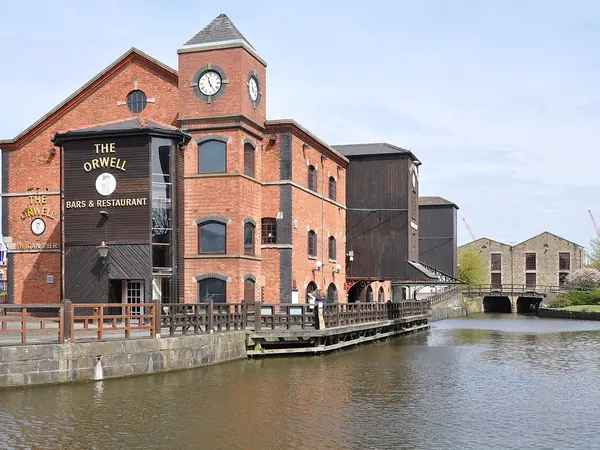
Closer in, Stephens Way at Goose Green is a smaller, older industrial park, and Hazlemere at Land Gate backs straight onto J25. The roofs vary as much as the estates do. A recent shed has a profiled steel roof designed with modern loads in mind, whereas a unit from a few decades back may still carry fibre-cement sheets, which HSE says to treat as fragile until someone competent proves otherwise. Then there are the canal-side mills around Wigan Pier, such as Trencherfield Mill from 1907, where heritage questions come up that a shed never raises. The council has its own stake in all this. It declared a climate emergency in 2019, is aiming for a net zero borough by 2038, and is fitting rooftop solar to its depot on Makerfield Way.

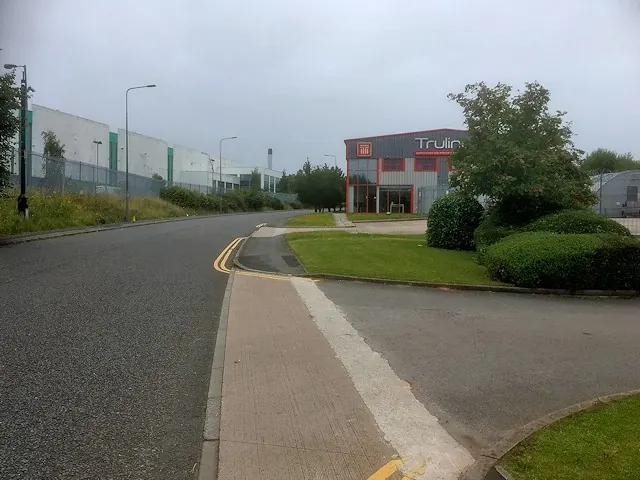
Industrial and trade units at Martland Mill Business Park, Wigan
Photo: David Dixon, Wikimedia Commons, CC BY-SA 2.0

£0

Site survey and a review of your half-hourly data

kWh

Systems sized from your own meter readings

G99

Grid application drawn up and submitted for you

M17

Based on Trafford Wharf Road, Trafford Park

Our work in Wigan

What we fit on Wigan sites

What solar does for a big Wigan shed

A distribution building has different economics from a factory with machines running all day. These six points are written with that difference in mind.

The roof probably isn't your limit

A typical motorway-side shed has far more roof than it needs to cover its own daytime use. That works in your favour: we can pick the best-orientated, least obstructed bays, keep clear of rooflights and the awkward strip above the dock doors, and still produce most of the electricity the building draws during working hours.

Export limits built in from the first drawing

Where an export limit applies, a G100 form goes in alongside the G99 application and the agreed figure ends up in your connection agreement. We design the inverters and export control to that number from day one, so the DNO's offer never forces a redesign halfway through the project.

Daylight units at business prices

DESNZ put the average price paid by small businesses using between 20 and 499 MWh a year at 28.6p per kWh in the second quarter of 2026, Climate Change Levy included. Each kWh your roof produces and the warehouse uses straight away is one you no longer buy at something close to that rate.

Rates bill unchanged

In England, plant used for onsite renewable generation, and storage used with it, is exempt from business rates from April 2022 until March 2035. On a large shed where the rateable value already stings, several hundred panels on the roof won't push the rates demand any higher.

Capital allowances that suit a budget cycle

On the tax side, a Wigan company's panels sit in the special rate class, not the main pool. The £1m Annual Investment Allowance covers most plant and machinery and is the route many companies use, while spend above it can still attract the 50% special-rate first-year allowance. Your accountant should confirm the treatment, particularly for inverters and any battery.

Pulling the same way as local policy

Wigan Council wants the borough at net zero by 2038 and is putting panels on its own depot roof. That doesn't change your payback, but it does mean a solar scheme on an employment site lines up with the council's direction of travel rather than working against it when prior approval is needed.

"Most of the distribution buildings we're asked to look at near the M6 could physically carry a far bigger array than their daytime load justifies, so the first conversation is usually about how much of the roof to leave empty."
Based on enquiries handled by Commercial Solar Manchester in and around Wigan
Guarantees and warranties

Who answers for your Wigan installation, and for how long

There are two layers of cover on a commercial installation, and it pays to know which is which. The first is the installer's workmanship guarantee. It covers the way the system was put in: the fixings through your roof, the cable runs, the terminations, the protective devices and the commissioning settings. Its length and terms are written into the quotation, so you can read them before you sign rather than discover them afterwards.

The second layer belongs to the manufacturers. Panels normally carry a product warranty and a separate performance warranty, which promises a minimum output after a set number of years. Inverters and batteries have their own terms, often with cycle or throughput limits on storage. These vary by product, so every proposal names the exact models and attaches their warranty documents.

A guarantee is only as good as the install underneath it. That's why the structural check comes before the design is fixed, why every string is tested and recorded to BS 7671, and why the grid connection is commissioned to the settings SP Electricity North West has approved. If something we fitted fails because of how it was fitted, we come back and put it right.

In writing

Workmanship guarantee, set out in your quote

Per model

Manufacturer product and performance warranties

Test results, drawings, warranty certificates and the grid connection agreement are handed over in one pack on the last day.

Step by step

How a Wigan solar project runs, stage by stage

  1. 1

    Half-hourly data before anything else

    We ask for a year of half-hourly consumption, your agreed import capacity and any shift or seasonal pattern. A chilled warehouse at Wheatlea behaves nothing like an ambient one on Westwood Park, and the data tells us which you are before a single panel goes on a drawing.

  2. 2

    A layout and an honest export figure

    The proposal shows array size, expected yield (PVGIS puts a well-angled, south-facing panel in Greater Manchester at roughly 900 kWh per kWp a year), how much you'll use on site and how much would spill to the grid. Where spill looks large, a battery option sits beside it.

  3. 3

    Roof check and the G99 application

    A structural engineer confirms the frame and purlins will carry the extra load, and we check sheet type, fixings and rooflights. The G99 application goes to SP Electricity North West with a G100 form if export is limited. For LV generation, the guaranteed standard for issuing a quotation is 45 working days.

  4. 4

    Access planned around the docks

    Towers and edge protection go where they won't block HGV turning circles or loading bays. We agree the route with your transport manager, schedule crane lifts for quiet hours, and put staging or netting under any fragile sheets and rooflights we have to work near.

  5. 5

    Rails, panels, inverters and cable

    Rails are fixed to suit the roof profile, panels go on, and DC strings run to inverters placed for short cable runs and easy isolation. Routes are agreed with you and your insurer with the RC62 fire code in mind, and the AC tie-in happens in a planned, short shutdown.

  6. 6

    Testing, export control and switch-on

    Every string is tested, inverter protection settings are checked against G99, and the export limiter is proven to hold the agreed figure under load. Only then do we energise the system and tell the DNO it is live.

  7. 7

    Handover and remote monitoring

    You get the O&M file, as-fitted drawings, test certificates and a monitoring login. Alerts are set up so an inverter that trips on a Saturday gets flagged straight away, instead of turning up a month later as a disappointing bill.

Away from the plant room

What to do in Wigan

Wigan on the map

Reviews

What Wigan businesses say about us

We're a new name, so you won't find a wall of reviews here yet. We'd rather show you nothing than make some up.

For a project this size, reviews were never the best evidence anyway. Ask any installer you're considering for a reference site you can visit, a year or more of generation data from a system they fitted, and the grid connection paperwork from a past job. If they can't produce those, keep looking.

What solar costs for a Wigan business

On a Wigan distribution shed the panels are rarely what moves the price most. The bigger swings come from access around a live yard, whether old fibre-cement sheets need over-cladding first, how far the inverters sit from the main switchboard, and what SP Electricity North West asks for in its connection offer. For a sense of scale on smaller systems, DESNZ data for 10-50kW installs puts the average at roughly £1,200 to £1,250 per kW, so a 40kW array would come to around £48,000 to £50,000. Bigger arrays usually cost less per kW, and we price each one from the survey.

Every quote

Fixed price

Solar & battery cost guide

Commercial solar in Wigan: questions we get asked

Do we need planning permission for solar on a Wigan warehouse roof?

Usually not a full application. Rooftop solar on non-domestic buildings is permitted development under Class J, with no size cap since the 1MW limit was removed in December 2023. Arrays above 50kW need prior approval from Wigan Council on design, appearance and glare, and the council has 56 days to decide. Panels must stay at least 1m back from the roof edge and can't go on a listed building. The borough has 23 conservation areas, so we check where your site sits before anything is submitted.

Why would the DNO limit how much our site can export?

Local cables and transformers have finite capacity, and a large shed can generate far more at midday than the network nearby was built to take back. SP Electricity North West may offer a connection with an export cap, or a flexible connection, as an alternative to charging you for reinforcement. We then design to that cap using export limitation under G100.

Will panels on the roof affect our buildings insurance?

Tell your insurer early. RC62, the joint code of practice published by the Fire Protection Association in 2023 with RISCAuthority, MCS and Solar Energy UK, sets out what insurers look for on commercial rooftop PV, from isolation to cable routing and roof construction. We design with it in mind and hand over the documents your broker will ask for.

What if our lease ends before the system has paid for itself?

It's a common question on multi-let estates. The options include agreeing with the landlord that the system stays and is reflected in the lease terms, a roof lease or on-site PPA where a third party owns the panels and sells you the power, or a design that can be removed. Both sides' solicitors should see the arrangement before work starts.

Send us a year of half-hourly data

That and a roof plan are enough for a first view of what your Wigan site could generate, what the network will accept, and whether a battery belongs in the design. Call 0161 524 5781 or use the form.