
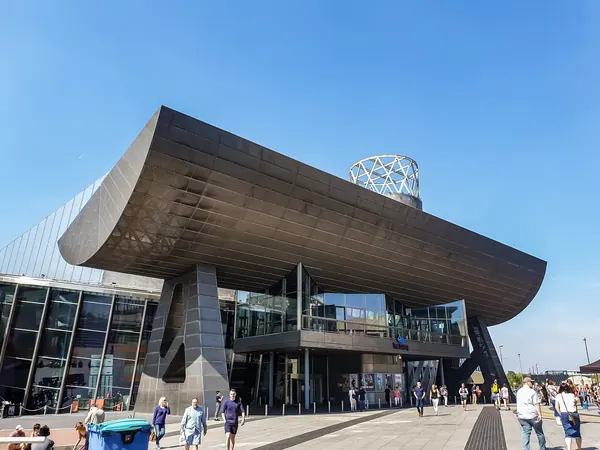
The Lowry
The steel-clad arts centre at the tip of Pier 8 on Salford Quays, opened in 2000, stages theatre and comedy and has galleries showing work by L.S. Lowry.
Learn more about The Lowry on Google MapsBattery storage in Salford earns its place on a particular kind of site: the big logistics or process building out west towards Irlam and Cadishead that runs through the night. Those sites already use most of their solar during the day. What holds them back is the size of the array. Design it only for the midday base load and you leave half the roof empty; fill the roof and on bright days you export surplus for less than it would save you at 9pm. A battery breaks that link. It takes the afternoon surplus, holds it through the weekday red band between 4pm and 7pm, and feeds the late shift and the early hours. For sites without solar, the same unit can charge on cheap green-band rates and shave evening peaks. We size it from your half-hourly data and the shape of your shift pattern, not a rule of thumb.
We reply within one working day to book a site visit.
These are the gains we look for when a Salford site's data lands on our desk.
01
With storage behind it, the array no longer has to stop at the midday base load. You can fit what the roof will hold and carry the extra into the evening, which usually lowers the cost per kWh produced.
02
Lighting, refrigeration and charging for forklift fleets do not stop at dusk. A battery charged from the afternoon surplus covers part of that night load, which would otherwise be bought in from the grid at full price.
03
SP Electricity North West's red band runs from 16:00 to 19:00 on weekdays, all year round, and that is when a shift handover often pushes demand up. Discharging through those hours cuts the most expensive part of the distribution charge.
04
Large sheds with dock levellers, compressors and chargers starting together can spike above their agreed maximum import. A breach is charged for the whole billing period, so a battery that trims those spikes can pay for part of itself.
05
If you plan to add electric vehicles or more chargers at a depot, storage can absorb some of the new peak instead of applying for a larger connection straight away. That is often quicker than waiting on network reinforcement.
06
Battery storage used with onsite renewable generation is exempt from business rates in England until 31 March 2035. Designing the controls to run mainly on your own solar keeps the system clearly inside that exemption.
£0
Site survey and a review of your half-hourly data
kWh
Systems sized from your own meter readings
G99
Grid application drawn up and submitted for you
M17
Based on Trafford Wharf Road, Trafford Park
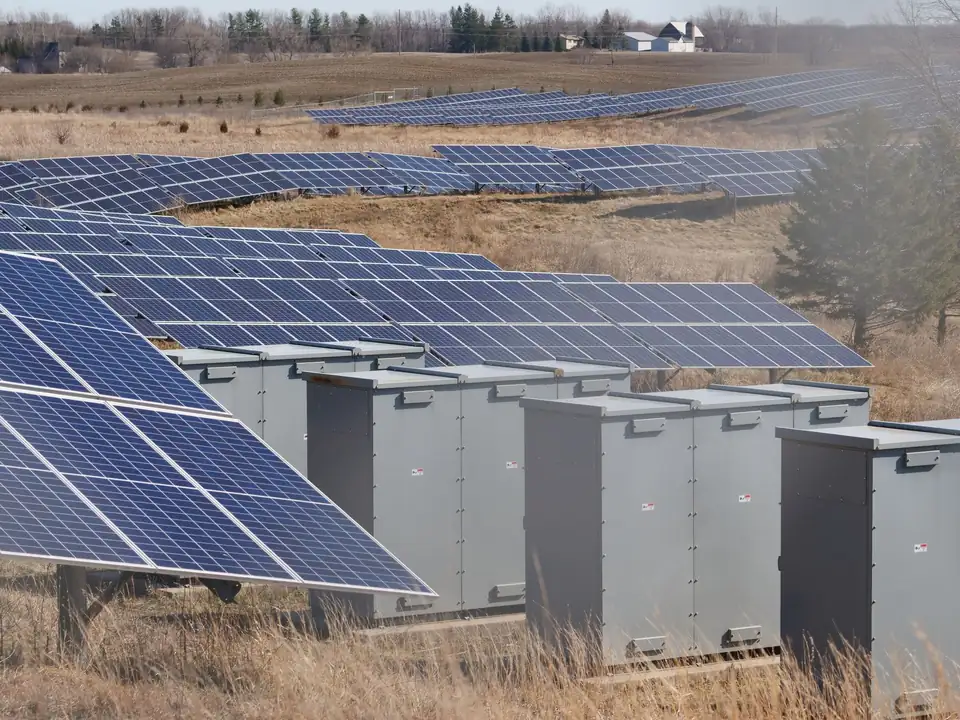
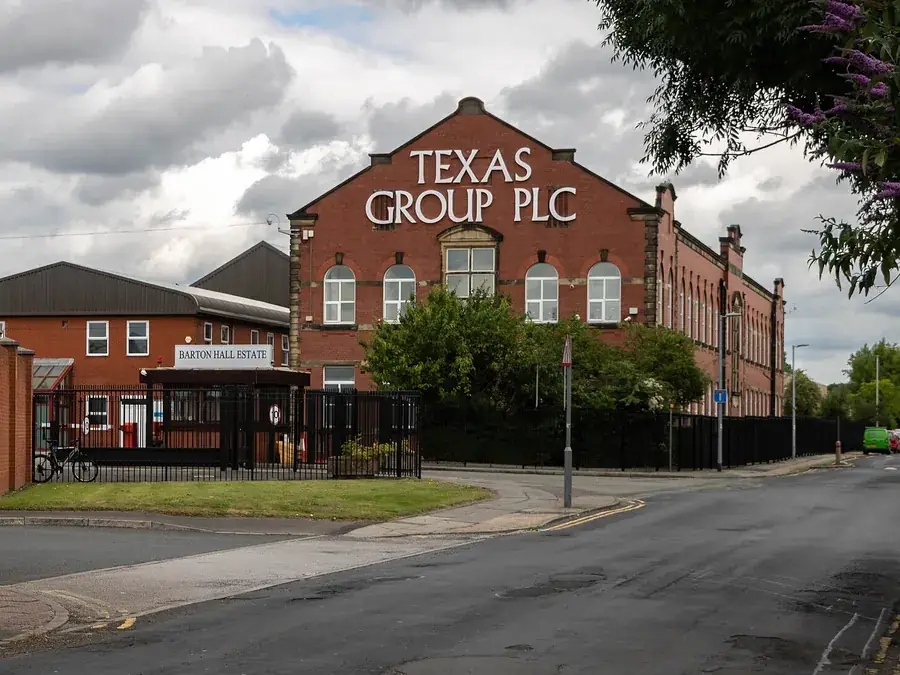
The big sheds around Northbank, Port Salford and the Barton side of the M60 have two things in common: wide roofs and yard space. That makes outdoor containerised batteries the normal answer here, set on a plinth away from the building with clear fire separation and room for a fire appliance to reach them. Older red-brick buildings, like those on Barton Hall Industrial Estate, are more likely to need an internal plant room or a smaller wall-mounted system.
Fire safety drives the layout as much as the electrics. National planning guidance encourages early contact with the fire and rescue service for systems of 1 MWh or more, and asks applicants to follow National Fire Chiefs Council siting advice. Salford City Council decides any planning application. We build those conversations into the programme from the start.
Storage only works as well as the array feeding it, so read our guide to commercial solar panels in Salford before settling on a battery size.
"Most of the 24-hour operations we're asked to price in western Salford want the battery sized for the evening red band first and for overnight solar shifting second."
We start with the overnight hours. A year of half-hourly data shows what the building draws between dusk and dawn, which sets the realistic ceiling for a battery fed by solar.
We compare an array sized to daytime demand with a larger one paired with a battery, so you can see what the extra kWh of storage is actually buying.
We agree the battery position with your site and insurer, and submit the G99 application to SP Electricity North West. Storage counts as generation, so this step cannot be skipped.
Plinth construction and cable trenching are scheduled around traffic flows in the yard. Lifts and deliveries go in at times your transport team chooses.
The battery, power conversion and protective devices are installed to BS 7671, including the 2026 chapter on stationary batteries, and the controller is linked to the site meter and any solar inverters.
We test charge and discharge with the building running normally, confirm the system respects any export limit, and check it isolates safely if the grid goes down.
Charge and discharge windows are adjusted over the first weeks so the battery empties when your shifts need it most. You keep a monitoring login and a written record of the final settings.
There are two layers of cover on a commercial installation, and it pays to know which is which. The first is the installer's workmanship guarantee. It covers the way the system was put in: the fixings through your roof, the cable runs, the terminations, the protective devices and the commissioning settings. Its length and terms are written into the quotation, so you can read them before you sign rather than discover them afterwards.
The second layer belongs to the manufacturers. Panels normally carry a product warranty and a separate performance warranty, which promises a minimum output after a set number of years. Inverters and batteries have their own terms, often with cycle or throughput limits on storage. These vary by product, so every proposal names the exact models and attaches their warranty documents.
A guarantee is only as good as the install underneath it. That's why the structural check comes before the design is fixed, why every string is tested and recorded to BS 7671, and why the grid connection is commissioned to the settings SP Electricity North West has approved. If something we fitted fails because of how it was fitted, we come back and put it right.
In writing
Workmanship guarantee, set out in your quote
Per model
Manufacturer product and performance warranties
Test results, drawings, warranty certificates and the grid connection agreement are handed over in one pack on the last day.
The comparison below covers battery, solar alone and grid-only supply in general terms. For a Salford operation that runs at night, the solar-only column tends to underplay what the roof could do, because storage changes how big the array can sensibly be.
| Comparison point | Solar only | Solar + battery | Battery on its own (tariff shifting) |
|---|---|---|---|
| Solar used on site | Only what the load takes at the time | Higher: surplus stored for later | No solar involved |
| Red-band (16:00-19:00) costs | Little effect, almost none in winter | Cut with stored solar or overnight charge | Cut with overnight green-band charge |
| kVA capacity charges | No reliable effect | Peaks can be shaved | Peaks can be shaved |
| DNO export limit | Surplus above the cap is lost | Surplus stored instead of clipped | Cap applies to battery discharge too |
| Backup in a power cut | None as standard | Only if designed for it | Only if designed for it |
| Planning and permissions | G99; roof usually permitted development | G99; roof PD plus a siting and fire review | G99; no PD class, so take planning advice |
No reliable published figure exists for commercial battery prices per kWh, so we quote from your data rather than a list. These are the points that move the number.
The more of the night load you want to carry, the more capacity you need. Most Salford sites start with the red band and add capacity only if the data supports it.
Outdoor cabinets on the open yards at Northbank and near Port Salford are usually the cheaper route. Older brick premises around Cadishead and Barton Hall can need internal fire-rated rooms, which cost more to build.
Big sheds can have long cable runs between the yard and the main switchroom. Trenching, cable size and any new switchgear add to the price.
If SP Electricity North West asks for export limits or protection changes as part of G99, those form part of the cost. We find that out before we quote a final figure.
It is often the strongest case we see, because the stored energy always has somewhere useful to go. The return depends on how much of your solar is currently exported and how much load you carry in the red band. Your half-hourly data answers both.
Permitted development rules have no class for battery storage, so an outdoor unit may need an application to Salford City Council. A battery inside an existing building may not. We confirm the position for your site, and for systems of 1 MWh or more we contact the fire service early, as national guidance encourages.
The canal itself is rarely the constraint. Ground conditions for the plinth, access for a crane and fire appliances, and separation from the building matter more. We check all three at survey.
Usually, yes. An existing array can be coupled to a battery on the AC side, which leaves your current inverters in place. We look at their age and settings first, because replacing them at the same time sometimes makes more sense.
It can help. By trimming peaks, storage can let a site add load without immediately increasing its agreed capacity. Whether that avoids a new connection depends on how far the expansion goes, which is something we model with you.
The steel-clad arts centre at the tip of Pier 8 on Salford Quays, opened in 2000, stages theatre and comedy and has galleries showing work by L.S. Lowry.
Learn more about The Lowry on Google Maps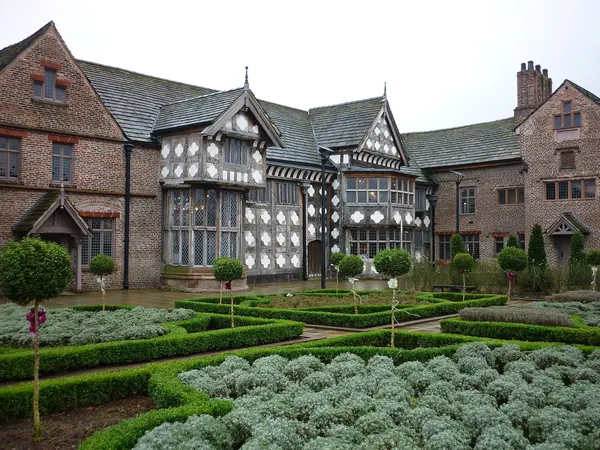
A Grade I listed Tudor manor house in Ordsall, first recorded in 1210, now a free museum with period rooms and restored formal gardens after a major restoration finished in 2011.
Learn more about Ordsall Hall on Google Maps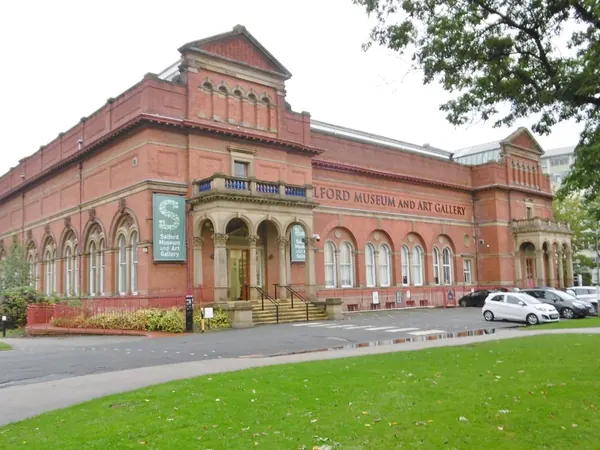
Set at the edge of Peel Park on The Crescent, this museum opened in 1850 and is best known for Lark Hill Place, a recreated Victorian street, alongside its Victorian art gallery.
Learn more about Salford Museum & Art Gallery on Google MapsWe're a new name, so you won't find a wall of reviews here yet. We'd rather show you nothing than make some up.
For a project this size, reviews were never the best evidence anyway. Ask any installer you're considering for a reference site you can visit, a year or more of generation data from a system they fitted, and the grid connection paperwork from a past job. If they can't produce those, keep looking.
Send us twelve months of half-hourly data and a note of your shift pattern. We will show you how much of your Salford site's solar a battery could keep, and what that is worth.