
10 October 2026
Is Battery Storage Worth It For A Manchester Business?
When commercial battery storage pays for a Manchester business: SP Electricity North West's 4-7pm red band, kVA capacity charges, export limits and backup.
Of everything in a commercial energy project, the battery is the part most often sold on enthusiasm rather than arithmetic. Some sites in Greater Manchester will get a solid return from one. Others would be better spending the money on more panels, or nothing at all. The difference comes down to three things on your electricity bill and one on your roof. On SP Electricity North West’s network, the 4pm to 7pm weekday red band carries distribution charges that can run six to ten times the amber rate on smaller business tariffs. Half-hourly sites also pay a daily charge for every kVA of agreed capacity, and one bad half-hour over that limit is billed for the whole month. And many solar arrays here are export-limited under G99, so units the site can’t use go to waste. This guide works through when commercial battery storage pays for a Manchester business, and when it doesn’t.
What a business battery actually earns its money from
A home battery mostly shifts cheap overnight power into the evening. A commercial battery can do that too, but the bigger wins are usually elsewhere. It can cut the expensive red-band units, shave peaks that would push you over your agreed capacity, and catch solar output that would otherwise be clipped or exported for very little.
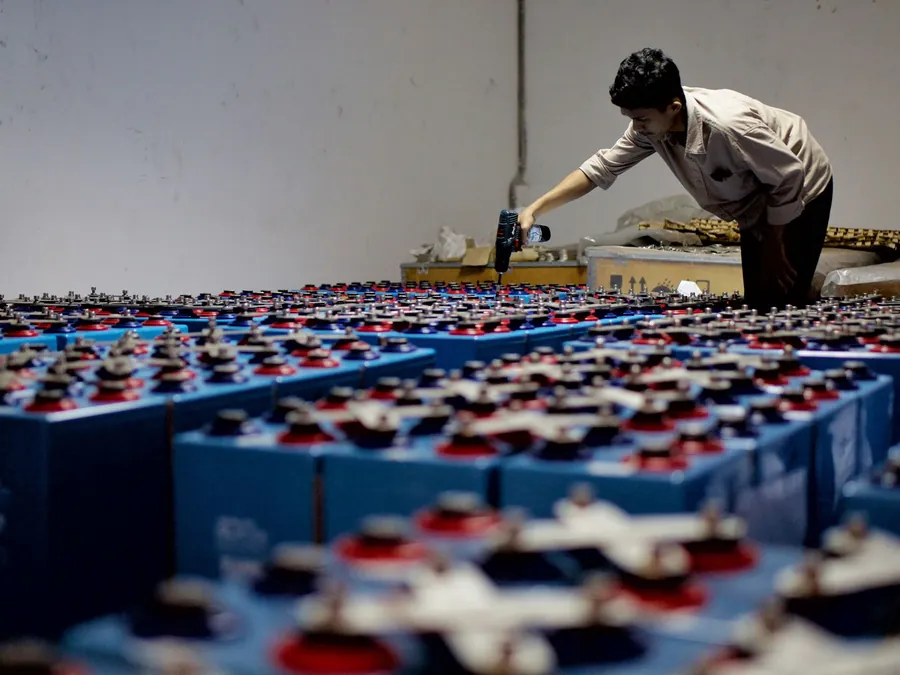
Each of those benefits depends on how your site uses power. A cold store running hard at 5pm on a winter weekday will see a different result from an office that empties at half four. That’s why we start any commercial battery storage project in Manchester with your half-hourly meter data, not a brochure.
There’s no sourced price per kWh for commercial batteries that we’d be comfortable quoting, so we won’t. Costs vary with size, chemistry, enclosure, inverter and how far the battery sits from your main switchboard. The sums only make sense once those are known.
The 4pm to 7pm problem on SP Electricity North West’s network
Distribution Use of System charges, or DUoS, are what the network operator bills for moving power to your meter. SP Electricity North West splits the day into time bands, and the split matters. Under the 2026/27 charging statements from SP Electricity North West, the red band is 4pm to 7pm, Monday to Friday, all year round, bank holidays included.

Amber runs from 9am to 4pm and from 7pm to 8:30pm on weekdays, plus 4pm to 7pm at weekends. Everything else is green. For a low-voltage site on site-specific charges, the 2026/27 red unit rate is 7.832p per kWh against 0.425p in amber and 0.024p in green. On the aggregated tariffs that smaller businesses sit on, red is roughly six to ten times amber.
Two caveats. First, these are network charges only, not your whole unit price. Second, whether you feel them directly depends on your supply contract. Some contracts pass DUoS through line by line, others bundle it into a flat rate. If yours passes it through and your site runs well into the evening, discharging a battery between four and seven is an easy saving to model. If your shifts end at three, there’s less to save.
Capacity charges and the cost of one bad half-hour
Half-hourly metered sites with CT metering pay a daily capacity charge on their Maximum Import Capacity, measured in kVA. For a low-voltage site-specific customer that’s 6.92p per kVA per day in 2026/27. It’s a fixed cost you pay whether you use the capacity or not.
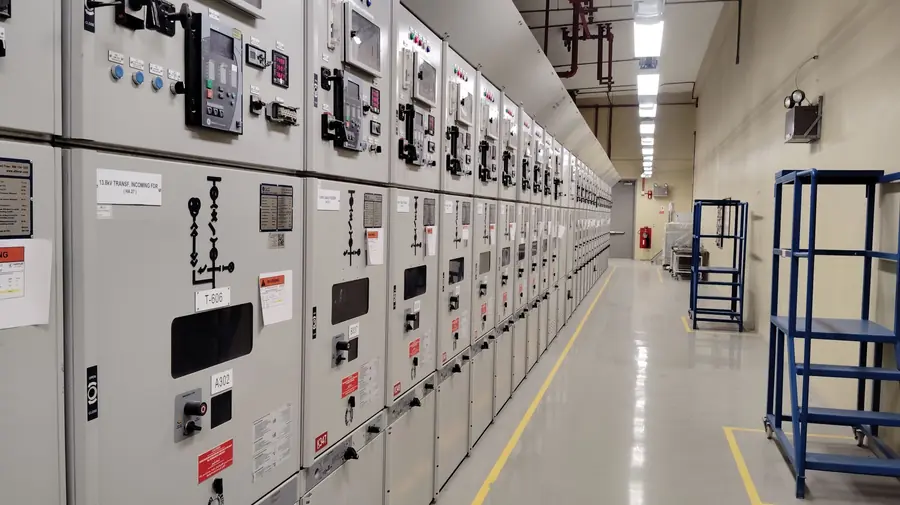
The trap is going over. If your site exceeds its agreed capacity, the excess kVA is charged at the excess rate for the full billing period in which it happened. A cold Monday morning with the compressors, ovens and forklift chargers all starting together is the classic way it happens.
A battery can sit in the background and discharge whenever demand nears your limit. That flattens the peak. Some sites then look at lowering their agreed capacity to save on the daily charge, but tread carefully. The network operator allows a reduction only once in 12 months, and capacity you give up may not come back without paying for reinforcement. Reactive power charges also apply if your kVArh runs above a third of your kWh in a half-hour, which is a power factor below about 0.95. Some battery inverters can help with that too, but check the specification rather than assuming.
Keeping more of your own solar on site
Solar output in Manchester is lopsided. PVGIS figures for Trafford Park show an optimally tilted array making about 110 kWh per kW in June and 30 in December. On a summer Saturday with the factory shut, a large array can easily outrun the site’s demand.

Where the export goes is the question. If your G99 connection carries an export limit, the inverters throttle back and the extra units are lost. If you can export, payment isn’t guaranteed. Suppliers that mainly serve businesses aren’t obliged to offer the Smart Export Guarantee, and where a battery is charged partly from the grid, licensees don’t have to pay SEG on that grid-charged element. They may ask for proof that exported power came from your panels.
A battery that soaks up the midday surplus and releases it into the red band turns a cheap or wasted unit into an expensive one avoided. That’s the strongest case we see for pairing storage with solar. If you’re still pricing the panels themselves, our guide to what commercial solar panels cost in Manchester covers the payback side before any battery is added.
Backup power: what a battery can and can’t keep running
Resilience is the reason some owners raise first, and it’s the one most often misunderstood. A standard grid-tied battery switches off when the grid fails. That’s a safety requirement, so engineers working on the network aren’t met by power flowing back up the cable.
To ride through a power cut, the system needs an inverter and changeover equipment designed to run part of the site as an island. Even then, a battery sized for peak shaving won’t usually carry a whole factory for long. What it can do well is keep critical circuits alive: tills and servers, alarms, a cold room, controls for a process that’s costly to restart.
If backup is your main goal, we’d want a list of those circuits and how long they need to run. It may turn out that a smaller, dedicated backup system does the job better than one large battery trying to do everything.
When battery storage isn’t worth it
Not every site is a good fit. If your business uses little power after 4pm on weekdays, the red-band saving is thin. If your supply contract fixes a single unit rate with no DUoS pass-through, that saving may not reach your bill at all until the contract changes.
Sites with a steady, flat load and plenty of headroom under their agreed capacity won’t gain much from peak shaving either. And where a solar array is sized so that the site uses almost everything it makes, there’s little surplus to store.
Battery life is a factor in the maths as well. One manufacturer’s lithium iron phosphate datasheet quotes at least 6,000 cycles at 90% depth of discharge with a 10-year warranty and 70% capacity at the end of it. That’s one product rather than an industry rule, but it shows why the warranty terms belong in the business case. A battery cycling twice a day reaches its rated cycles much sooner than one cycling a few times a week.
Safety, standards and planning for a battery on site
Commercial batteries above 50kW sit outside MCS, so design follows the IET Code of Practice for Electrical Energy Storage Systems and BS 7671. The third edition of the IET code, published in 2024, covers commercial and industrial installations and adds fire-safety and location guidance. Amendment 4 to BS 7671, published in April 2026, brings in a new chapter on stationary secondary batteries, and the previous version of the wiring regulations is withdrawn on 15 October 2026. PAS 63100, which you may see mentioned, only applies to dwellings.
On the grid side, SP Electricity North West counts batteries as generation, so almost every business battery needs a G99 application. Its G99 application page for generation and storage notes that storage is exempt from some requirements but not all.
Planning is less clear-cut than for rooftop solar. There’s no permitted development class for battery storage in the planning rules, and government guidance encourages applicants for systems of 1 MWh or more to talk to the local fire and rescue service before applying. Tell your insurer early, too. A battery inside an occupied building or beside a loading bay raises questions about location, ventilation and fire separation that are much easier to answer at the design stage than after installation.
If you’d like us to run your half-hourly data and tell you plainly whether a battery earns its place, start here: ask for a battery storage assessment for your Manchester site
Frequently asked questions
When is the red band on SP Electricity North West's network?
Under the 2026/27 charging statement, the red band runs from 4pm to 7pm, Monday to Friday, all year, including bank holidays. Distribution charges per unit are far higher in that window than at any other time of day.
Can a battery stop my business going over its agreed capacity?
It can help. A battery discharging during your heaviest half-hours lowers the peak drawn from the grid. That matters because if you exceed your agreed import capacity, the excess kVA is charged for the whole billing period, not just the half-hour you went over.
Does a commercial battery need G99 approval in Greater Manchester?
Yes, in almost every case. SP Electricity North West treats batteries as generation for G98 and G99 purposes, so a business battery above 16A per phase needs a G99 application. Storage is exempt from some G99 requirements but not all of them.
Will a battery keep my Manchester site running in a power cut?
Only if it's designed for it. A standard grid-tied battery shuts down when the grid fails. Backup needs an inverter and changeover arrangement built to run part of the site on its own, and the battery's size limits which circuits it can carry and for how long.
Do I pay business rates on a battery?
In England, storage used with onsite renewable generation is exempt from business rates from 1 April 2022 to 31 March 2035. A battery that only trades power from the grid, with no renewables involved, isn't clearly covered, so take advice before relying on the exemption.
Thinking about solar or a battery for your site?
Send us a year of half-hourly data and we'll tell you, in writing, what size of system makes sense and roughly what it would save. Manchester, Salford, Trafford, Bolton, Wigan and in between.