
30 October 2026
Commercial Solar Maintenance In Manchester: What An O&M Contract Should Cover
Commercial solar maintenance in Manchester explained: what an O&M contract covers, monitoring alerts, cleaning, testing intervals, inverters, insurance and cost.
Commercial solar maintenance in Manchester tends to get one of two treatments. Either it’s signed off in a rush alongside the installation contract, or nobody arranges it at all and the array is left to look after itself. Neither is a great way to run something that should earn its keep for 25 years or more. A 200kWp array on a warehouse in Trafford Park should make somewhere around 170,000 kWh a year. If one of its four inverters trips in May and nobody notices until the August bill, roughly a quarter of the output from the three brightest months of the year has gone. The panels will probably outlast their 25 to 30 year performance warranties. The inverters almost certainly won’t, and most string inverters need replacing after 10 to 15 years. This guide is for facilities managers and owners deciding what an operations and maintenance (O&M) contract should cover, how often things need checking, and what a sensible annual budget looks like.
What goes into a commercial solar O&M contract
An O&M contract has two halves. The preventive half is the planned work: visits, tests, cleaning and the paperwork that goes with them. The corrective half is what happens when something breaks, and that’s where most contracts get vague.
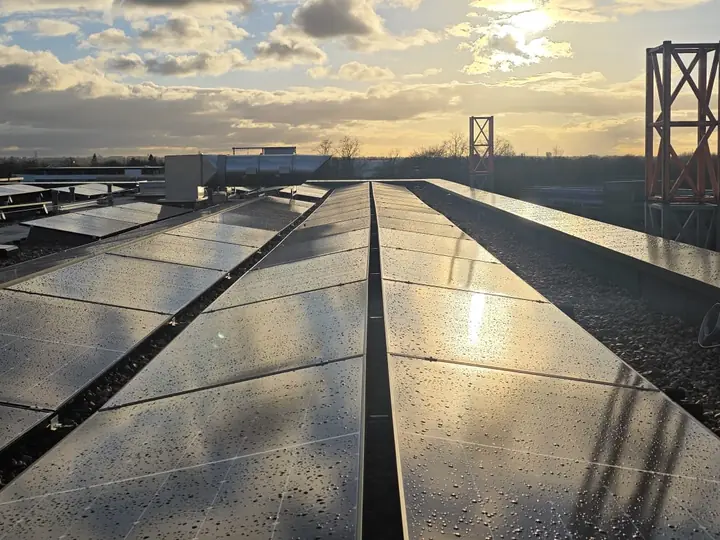
On the planned side, expect a site visit at least once a year covering the panels, mounting system, cabling, isolators and inverters. On flat roofs that should include checking that ballast blocks haven’t shifted and that cable ties holding DC cables off the membrane haven’t gone brittle in the sun. Inverter cooling fans and air filters need a look too, as do the fixings on pitched roofs after a winter of gales. Each visit should end with a written report you can file.
The corrective side is where you need detail. How fast does someone respond to a fault? Does the contract fee include repair labour, or only the diagnosis? Who chases the manufacturer for a warranty replacement, and who pays to get the new part onto the roof? A clause saying “reactive maintenance at standard rates” tells you very little until you know the rates.
Then read the exclusions. Common ones include parts, access equipment such as a cherry picker or scaffold, damage from storms or vandalism, and faults caused by other contractors. That last one comes up more than you’d think. Roofers and air-conditioning engineers have been known to walk on panels or knock connectors loose. Check two more things before signing: the notice period, and who owns the monitoring account when the contract ends. It should be registered to your business, not the contractor’s. If you’d rather hand the whole job to one firm, our solar maintenance and repair service covers commercial arrays across Greater Manchester, whoever fitted them.
Monitoring and fault alerts: who is actually watching?
Almost every commercial inverter comes with an online portal, and many sites add an independent data logger on top. The data is rarely the problem. The problem is that nobody is assigned to look at it, and alert emails go to an inbox that belonged to someone who left in 2022.

A useful monitoring setup flags a short list of specific events:
- an inverter offline during daylight hours
- one string producing noticeably less current than its neighbours
- zero generation on a day when the rest of the region is clearly sunny
- monthly output falling below what the array should make for that month
- the logger itself going silent
That last one is the alert that fires most often. The router gets unplugged, the IT team changes a firewall rule, or a SIM card expires, and the portal shows nothing for weeks. It’s harmless in itself, but while the link is down the array is effectively unmonitored.
In the contract, separate the response time from the fix time. Remote diagnosis within one working day is a reasonable ask. A site visit within a few working days is typical for a non-urgent fault. Some contracts on larger arrays offer an availability guarantee, promising that the system will be generating for a set share of daylight hours. Read how that share is calculated. Grid outages, export limits imposed by SP Electricity North West and shutdowns you requested are normally left out.
If you’d like to check the numbers yourself, the Welsh Government’s guidance and spreadsheet tools for monitoring rooftop solar arrays were written for public bodies, but the method of setting generation data against half-hourly import data works for any business.
Cleaning panels in Manchester’s damp, grimy air
People often assume that a city with Manchester’s reputation for rain never needs to clean its panels. Steeply pitched arrays do get a decent rinse. Panels laid at 10 or 15 degrees on a flat warehouse roof are a different matter, because drizzle doesn’t move enough water across the glass to carry dirt away. It just shifts it down to the lower frame and leaves it there.
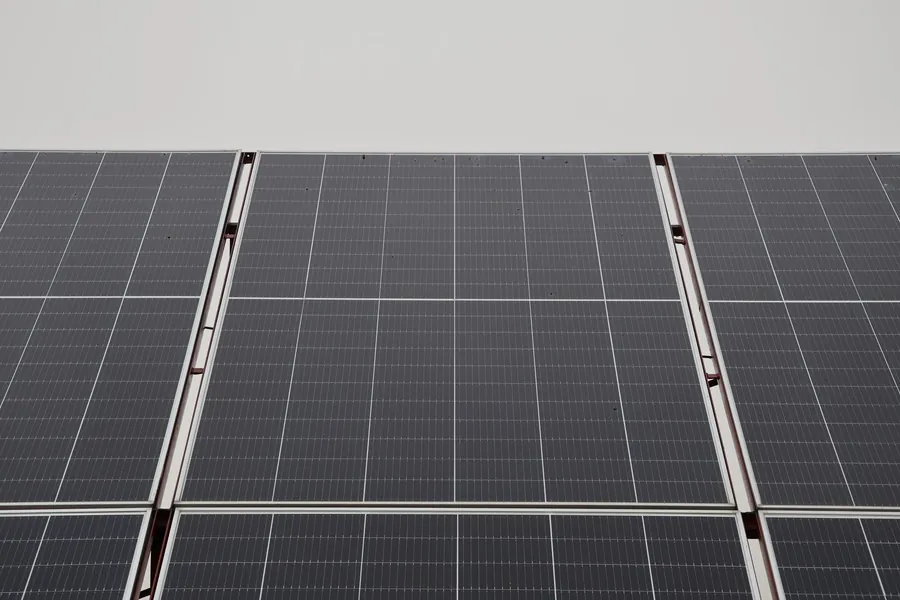
What lands on the glass depends on where the building is. Units beside the M60 or the M62 pick up a film of traffic soot. Sites along the Ship Canal, or next to scrap yards and aggregate depots, collect dust. Big flat roofs are a favourite with gulls and pigeons, and their droppings matter more than general grime because they cover individual cells completely. A covered cell runs hot and can drag down the output of the whole string. In the damp corners of a roof, near parapets or in the shade of plant equipment, moss and lichen can creep in from the edges of the panel frames. Business parks with tree belts add a layer of leaves every autumn.
The method matters as much as the timing. Purified water and soft brushes are the standard. Pressure washers, abrasive pads and household detergents can damage the glass coating and the seals, and some panel makers make their own cleaning instructions a condition of the warranty, so ask your contractor to confirm they’ve read them. Nobody should be standing on the panels.
Timing is best set by the data rather than the calendar. If output is drifting below the expected figure and the electrical tests are clean, dirt is the likely cause. If you do clean on a schedule, spring makes sense, because a large share of each year’s generation comes between April and August.
How often a commercial array should be inspected and tested
The legal starting point is plain. Under regulation 4 of the Electricity at Work Regulations 1989, electrical systems must be maintained as needed to prevent danger, so far as is reasonably practicable. A solar array is an electrical system that happens to sit on a roof. The regulations don’t set a frequency, so the frequency has to come from the system, the building and good practice.
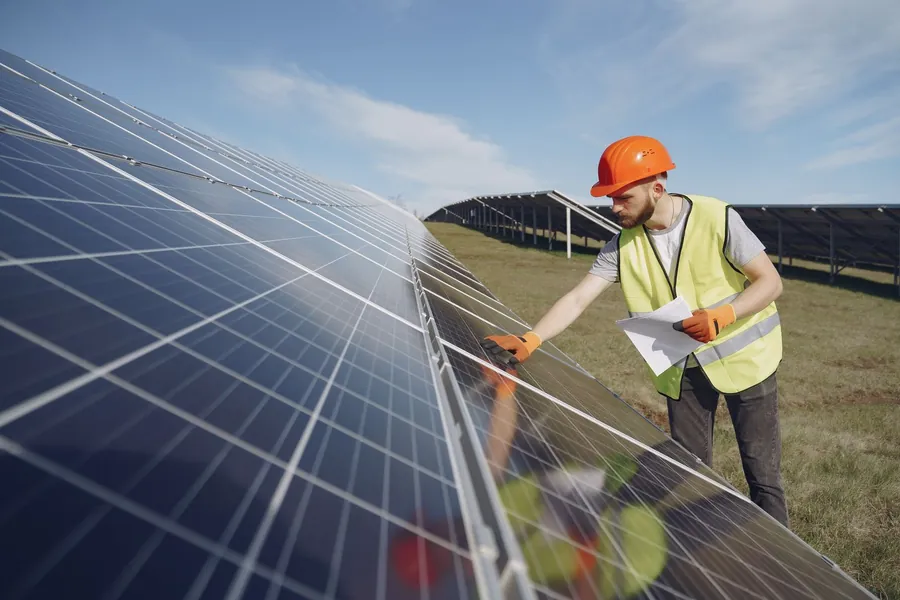
For most commercial roofs, a sensible pattern looks like this:
| How often | What gets done |
|---|---|
| Monthly | A remote review of generation against the expected figure, plus any open alerts |
| Every year | Visual inspection of panels, fixings, cables and isolators; string tests for voltage, current and insulation resistance, compared with the commissioning results |
| Every one to two years | A thermal imaging survey on a bright day, with the array under real load |
| Every few years | A periodic inspection and condition report on the electrical installation, at the interval the last inspector recommended (commonly up to five years for commercial premises, shorter for industrial sites) |
| After an event | A check after a severe storm, roof works, a fire alarm activation or signs of rodents in the cable runs |
The commissioning results are the baseline everything else is compared against. If you don’t have them, the first annual visit should rebuild that baseline from scratch. One bad reading tells you very little. A string whose insulation resistance has dropped steadily over three years tells you a lot.
Planning for inverter replacement over the system’s life
Panels are mostly glass, aluminium and silicon, and they age slowly. Inverters are power electronics with fans and capacitors that wear out with heat and hours. Over a 25 to 30 year system life, expect to replace each inverter at least once. If an early model turns out to be unreliable, it could be twice.
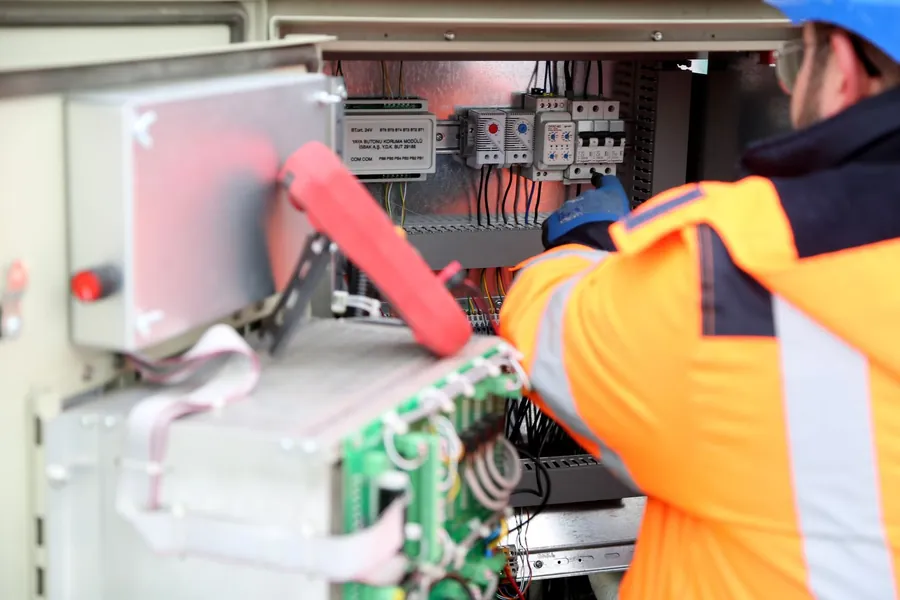
Where the inverters live makes a real difference. Units in a hot plant room or bolted to a sunny south-facing wall run warmer and tend to fail sooner than those in a cool, ventilated space. Monitoring helps here as well. A unit logging more and more over-temperature derates or grid faults each summer is telling you its replacement belongs in next year’s capital budget.
Standard inverter warranties are often 5 to 10 years, sometimes extendable. We went through what to ask about warranties, including who pays for labour and access on a replacement, in our guide to choosing a commercial solar installer in Manchester. Two further points matter once a system is a decade old. Manufacturers discontinue models, and some brands have left the UK market altogether, so a like-for-like swap isn’t always possible. And the grid connection was approved for the equipment originally fitted. Before ordering a different make or rating, ask your contractor whether SP Electricity North West needs to be told.
Inverter replacement is also a natural moment to think about storage. A hybrid inverter can make adding a battery later far simpler, and swapping it in costs less when the scaffold and electricians are already booked.
What your insurer will want to see
Start with the obvious step that often gets missed: tell your buildings insurer the array exists. Rooftop solar changes the fire risk and the value of the building, and an insurer finding out after a claim is not where you want to be.
Insurers of commercial property increasingly refer to RC62, the joint code of practice on fire safety with PV panel installations published by the Fire Protection Association. They may ask about DC isolation, cable routes through the building and how the system is inspected. The most useful thing you can hand over at renewal is a tidy file: the commissioning certificate, each year’s test results, thermal survey reports, a cleaning log and evidence that anything flagged was fixed. Requirements vary between insurers, so check your own policy wording rather than assuming.
Your O&M contractor’s insurance matters too. Ask for current public liability and employer’s liability certificates, plus professional indemnity if they’re redesigning anything. Ask how they’ll reach the panels safely. Older sheds across Greater Manchester often have fibre-cement roofs and plastic rooflights, and the HSE’s guidance on fragile roof surfaces says to treat any roof as fragile until it’s confirmed otherwise. A contractor who plans for that before quoting is one you can let onto the roof.
Finally, ask your broker whether the policy covers lost generation after an insured event. Some engineering and renewable energy policies do. Many standard buildings policies don’t.
What commercial solar maintenance costs a year in Greater Manchester
Planned O&M is usually priced as a fixed annual fee per kWp, or per visit with extras on top. Price guides published by UK O&M providers put the fixed-fee version at roughly £7 to £25 per kWp a year. Large arrays with easy access sit towards the bottom of that range. Small systems, awkward roofs and contracts promising fast response times sit towards the top.

Take the 200kWp Trafford Park roof from the start of this guide. That range works out at about £1,400 to £5,000 a year. Set it against what the array produces. If almost all of its 170,000 kWh replaces grid power at around 25p a unit, that electricity is worth roughly £40,000 a year to the business. A fault nobody spots that knocks 5% off output costs about £2,000 a year, which on its own covers a good part of the maintenance fee.
Some costs often sit outside the annual fee:
- cherry picker hire, scaffold towers or edge protection to reach the panels safely
- cleaning, often quoted per visit and priced on the number of panels
- parts, from a single connector or isolator up to a replacement inverter
- out-of-hours work, when a shutdown has to fit around your production shifts
We quote either per visit or as an annual plan, but only after seeing the system and the roof it sits on, because access alone can move the price more than the array size does. If you’re still working out the installation budget rather than the running costs, our guide to commercial solar panel costs in Manchester covers that side.
Got an array that isn’t watched by anyone, or a maintenance contract you’re not sure is worth renewing? Send us the system details and a few months of generation figures and we’ll tell you whether the numbers look right.
Frequently asked questions
What should a commercial solar O&M contract include?
At minimum: remote monitoring with named alerts, at least one planned site visit a year with recorded electrical tests, a thermal survey at an agreed interval, a stated response time for faults, and a written report after each visit. Read the exclusions just as closely. Parts, access equipment such as a cherry picker, cleaning and out-of-hours call-outs are often priced separately.
How often do commercial solar panels in Manchester need cleaning?
There's no fixed answer, which is why it's better to clean when the generation data or a site check says so. Steeply pitched arrays in open ground can go years without it. Low-tilt panels on flat roofs near main roads, railway lines, busy yards or roosting gulls and pigeons usually need attention more often, sometimes once a year, ideally in spring before the high-output months.
How long do commercial solar inverters last?
Plan on roughly 10 to 15 years for a string inverter, against panels with performance warranties of 25 years or more. That means most commercial systems will need at least one round of inverter replacements in their working life. Heat shortens it, so units in hot plant rooms or on sunny south-facing walls tend to age faster than ones in a cool, ventilated space.
How much does commercial solar maintenance cost a year?
Price guides published by UK O&M providers put planned maintenance at roughly £7 to £25 per kWp a year, so about £1,400 to £5,000 for a 200kWp roof. Large arrays with easy access sit at the lower end. Small systems, fragile roofs that need edge protection, and contracts with fast guaranteed response times sit at the higher end. Cleaning, parts and inverter replacement are usually extra.
Thinking about solar or a battery for your site?
Send us a year of half-hourly data and we'll tell you, in writing, what size of system makes sense and roughly what it would save. Manchester, Salford, Trafford, Bolton, Wigan and in between.