
22 October 2026
How To Choose A Commercial Solar Installer In Manchester
Choosing a commercial solar installer in Manchester: what MCS covers above 50kW, G99 track record, structural surveys, yield models, warranties and red flags.
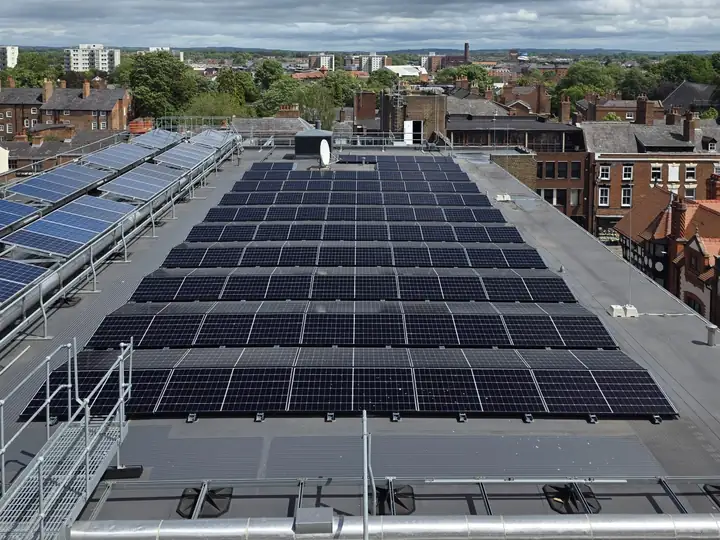
Choosing a commercial solar installer in Manchester is mostly a paperwork job, which is good news for whoever has to sign it off. On a house, a tidy brochure and an MCS logo get most people over the line. On a 150kW array across a Trafford Park warehouse the questions change. MCS certification stops at 50kW. Anything larger than about 11kW on a three-phase supply needs a G99 application to SP Electricity North West, which can take up to 45 working days to answer even a simple one. And the roof might be a 1970s fibre cement shed with fragile rooflights, or the saw-tooth roof of an old weaving shed in Oldham that was never meant to carry anything heavier than snow. This guide is for the facilities manager or owner sitting with three proposals that look much the same. It covers what to ask for, what to check and which lines in a quote should make you stop.
What a commercial solar installer should show you up front
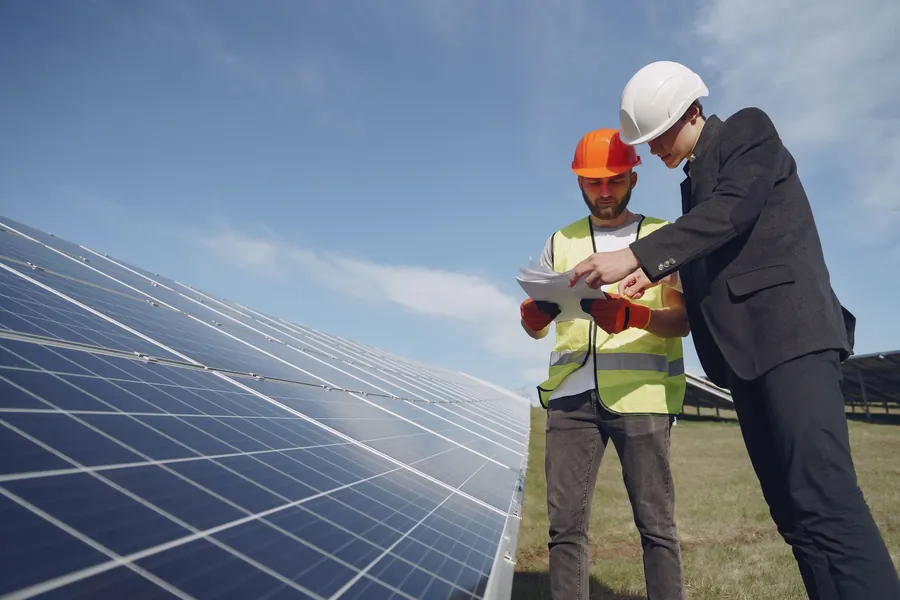
Before anyone visits the site, ask each firm for a short pack: company registration, public and employer’s liability certificates, any MCS certificate number, membership of an electrical contractor scheme, and two or three references from sites of a similar size. A serious contractor keeps all of that in a folder. If it takes a fortnight and three chasers to arrive, you’ve learned something about how the project would run.
Be clear about your own position, too. Legally, you’re a commercial client under the Construction (Design and Management) Regulations 2015, and the HSE’s guidance for commercial clients under CDM 2015 says your duties start as soon as you decide to go ahead. You have to make suitable arrangements for the project, hand the contractor what you know about the building (the asbestos register, roof drawings, where the incoming supply sits) and allow enough time. A good installer asks for those things before you think to offer them. One that never asks is skipping steps.
If you’re still deciding whether solar suits your building at all, our page on commercial solar panel installation across Manchester covers the basics. What follows assumes you’re past that point and choosing who to hire.
MCS certification: what it proves at commercial scale
MCS is the quality scheme most buyers have heard of. It matters. It checks that a firm designs and installs to the scheme’s standards, and export payments on smaller systems rest on it. Any certificate number can be checked on the MCS Find an Installer search in a couple of minutes. Do check, because a logo costs nothing to put on a website.
The catch is size. MCS covers solar PV and battery storage up to 50kW. A small office or a parade of shops might come in under that, but most warehouse, factory and distribution roofs across Greater Manchester don’t. Above 50kW there’s no MCS certificate for the installation, whatever the brochure suggests. The design should then be built around BS 7671, the G99 process and, where a battery is involved, the IET Code of Practice for Electrical Energy Storage Systems.
So the useful question isn’t “are you MCS certified?” It’s “which standards does this design follow, and who signs it off?” A firm that holds MCS for its smaller jobs and can walk you through the route for larger ones is a good sign. A firm that quotes 200kW and calls the whole thing MCS-certified has either misunderstood the scheme or is hoping you won’t look.
Ask, too, which export supplier they’d expect you to use and what evidence that supplier wants for a system over 50kW. It varies, and you want the answer before the scaffold goes up.
Grid connection experience with SP Electricity North West
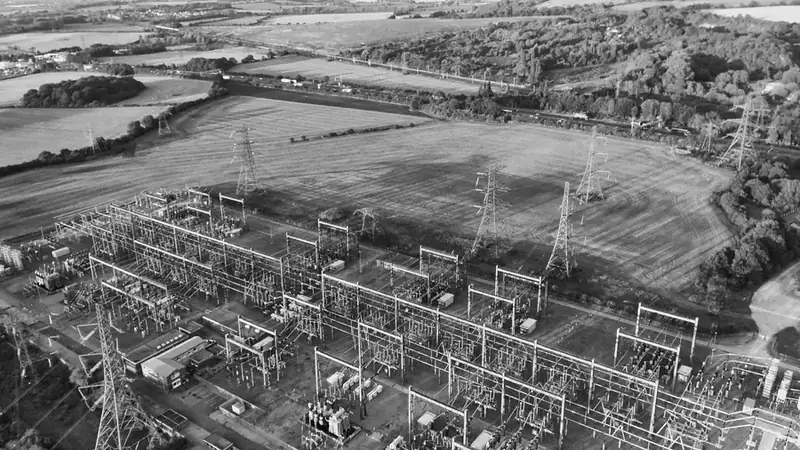
Any array of real commercial size has to be accepted by SP Electricity North West, the network operator for Greater Manchester, before it can be switched on. We’ve covered the process itself in our guide to the commercial solar grid connection and G99 in Manchester, so this section is only about judging how well an installer handles it.
Four questions sort the experienced from the hopeful:
- How many G99 applications have you sent to SP Electricity North West in the past year, and how many came back asking for more information?
- Have you designed an export limitation scheme, and did it need a witness test?
- Who prepares the application - your own engineers or an outside consultant?
- Does the application go in before we sign, or after?
Listen for specifics: the main incomer, the single-line diagram, Type Test Register numbers, export caps. “We handle all of that” is fine from whoever answers the phone and worrying from the person designing your system. An installer who’s done this often will also tell you straight that no switch-on date is firm until the network operator’s offer is in.
The structural survey: who does it and what it says
A commercial roof survey has two halves, and you want both in writing. One is the covering: how long the sheets or membrane have left, whether the rooflights are fragile, and whether fixings would go through fibre cement. The other is the frame. Can the purlins, rafters or trusses take the panels, the rails and, on a flat roof, the ballast, along with the extra wind and snow load the array brings?
Ask who does the structural check and what they’re qualified in. On larger roofs the honest answer is a structural engineer, and you should get the calculation, not a sentence saying the roof “has been assessed”. It ought to reflect where your building actually is. A unit up on the hills above Oldham or Rochdale takes far more wind than one beside the Ship Canal in Trafford Park, and the fixings or ballast have to match.
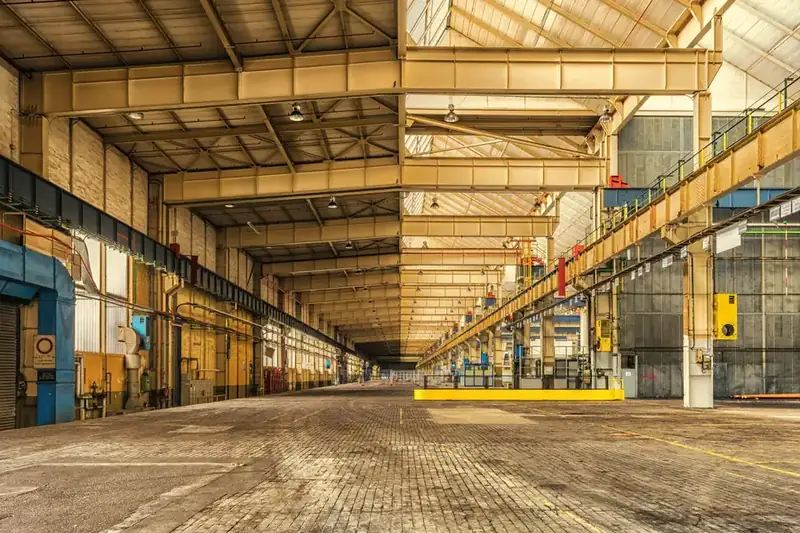
Greater Manchester has plenty of buildings that need extra thought. Industrial sheds from the 1960s to the 1980s often have asbestos cement roof sheets. The north-light roofs on former weaving sheds in Bolton, Rochdale and Oldham were shaped for daylight, not for extra load. If yours is one of these, expect the installer to ask for your asbestos register and to plan access around the HSE’s guidance on roof work and fragile surfaces. Our post on whether your roof will take commercial solar goes through the common roof types in more detail.
Checking the yield model behind the savings figure
Every proposal gives you a yearly generation figure in kWh and a saving in pounds. The saving depends entirely on the generation, so find out how they got there. A small error here carries straight through to the payback, and it’s the part of any proposal we’re fussiest about.

Ask for the modelling report itself, not just the headline. Commercial designers mostly use PVsyst or similar software, and some start from the EU’s free PVGIS tool. Whichever one they use, the report should show:
- weather data for your location, not a national average
- orientation and tilt for each roof section, including east-west layouts on flat roofs
- shading from parapets, rooftop plant, neighbouring buildings and the rows of panels themselves
- losses for cabling, inverter efficiency and dirt, plus the yearly degradation rate from the panel datasheet
- how much of the output your site will use itself, worked out from half-hourly meter data
That last line matters most. Solar power used on site saves you roughly your import rate. Power you export earns whatever your export tariff pays, which is normally far less. A model that assumes you use nearly everything, on a site that’s shut all weekend, will overstate the saving. Ask to see self-consumption month by month and hold it up against your own trading pattern. If the numbers still look generous, compare them with our breakdown of commercial solar panel costs in Manchester.
Warranties: whose name is on each one
Proposals tend to list warranties in one block, but they come from different companies and cover different risks. Read them one at a time.
Panels
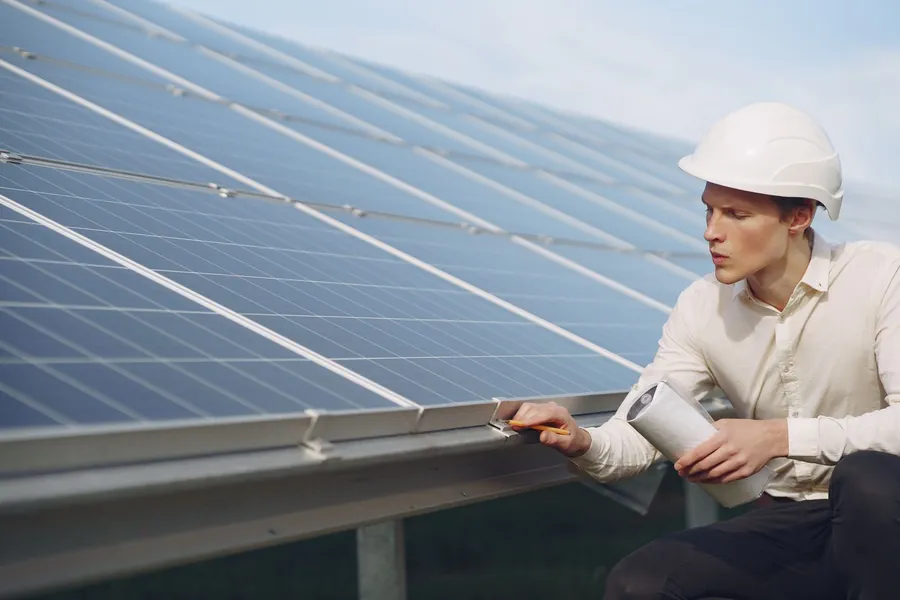
Panels normally carry two warranties. The product warranty covers defects in the panel, and on commercial-grade modules it usually runs somewhere between 12 and 25 years. The performance warranty promises a set share of the rated output after 25 or 30 years. Check both figures, and check that the manufacturer has a UK presence. A warranty helps only if someone in this country will deal with the claim.
Inverters
The inverter is the part most likely to need replacing during the life of the system. Standard cover is often 5 to 10 years, sometimes extendable for a fee. Ask whether the price includes an extension. If it doesn’t, put a replacement inverter into your 25-year sums.
Workmanship and insurance-backed guarantees
Workmanship is the installer’s own promise about fixings, waterproofing and cabling, and it’s only as good as the company behind it. Ask how long it lasts, what it leaves out and what happens if the firm stops trading. An insurance-backed guarantee is meant to cover that last risk. Many are written with homeowners in mind, so confirm the policy covers a business customer, find out who the insurer is and ask for the policy wording rather than a badge.
One more question: who pays for labour and access on a warranty claim? Plenty of manufacturer warranties replace the faulty part but not the scaffold, cherry picker or engineer’s time. On a three-storey mill building, that can cost more than the part.
Maintenance, monitoring and the handover pack
At handover you should receive the commissioning test results, as-built drawings, the G99 paperwork, warranty registrations and a monitoring login. IEC 62446-1 sets out the tests and documents a grid-connected system should come with, so ask whether the installer’s handover follows it.
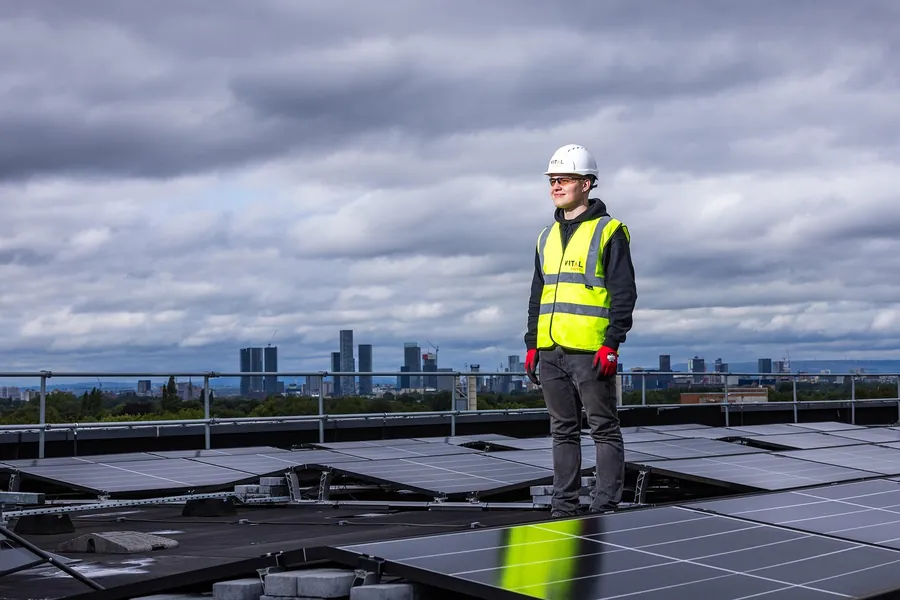
Monitoring is only useful if somebody watches it. Ask who gets the alert when a string drops out or an inverter trips, how fast they respond, and whether the fix is included in the maintenance contract or billed separately. Some contracts on larger arrays include an availability guarantee. If you’re offered one, read exactly how “available” is defined.
A sensible maintenance contract here covers a yearly visual and electrical inspection, thermal imaging every year or two to find hot spots, and cleaning when the data says it’s due rather than on a fixed calendar. Manchester’s rain does a fair share of the cleaning on pitched roofs. Low-tilt panels on flat roofs gather grime and moss along the bottom edge, and roofs near main roads, rail lines or busy yards get dirty quicker. Your insurer may also ask to see inspection records at renewal. Our commercial solar maintenance service sets out what a visit includes.
References from similar sites, and red flags in the proposal
Ask each installer for two or three references from sites like yours: similar roof, similar size, ideally in Greater Manchester or close by. Then ring them. Did the job finish when promised? Did the installer deal with the network operator without being chased? Has the system produced what the model predicted, and how were faults handled in the first year? If you can, go and stand on one of the roofs. Fifteen minutes on a finished array in Salford or Stockport will tell you more than any case study page.
Red flags in a commercial solar proposal
- A firm switch-on date before the G99 offer has come back.
- No structural calculation, only “subject to survey” or “roof assessed”.
- A generation figure with no modelling report behind it.
- Savings that value every kWh at your import rate, including what you’ll export.
- “MCS certified” on a system well over 50kW, with no other standard named.
- A large deposit due before the grid connection is agreed.
- Panels and inverters described as “Tier 1” or “premium” with no make or model.
- A single warranty line that claims to cover everything.
- No mention of asbestos, fragile rooflights or roof access on a building that obviously has them.
If the payment terms are hard to follow, our guide to buying, leasing or a PPA for commercial solar explains what each one commits you to. If the project might need consent, read planning permission for commercial solar in Greater Manchester before you sign.
Most of this can be asked in one email. The installers worth hiring answer it quickly and in detail; the rest tend to go quiet. If you’d like a proposal you can test against this list, book a free commercial solar survey for your Manchester site.
Frequently asked questions
Does a commercial solar installer need to be MCS certified?
For systems up to 50kW, in practice yes. MCS is the main quality scheme at that size and export suppliers generally lean on it. Above 50kW, MCS doesn't apply and a larger array won't have an MCS certificate. For those, ask which standards the design follows, such as BS 7671 and the G99 process, and who signs the design off.
Who should carry out the structural survey for a commercial solar array?
On most commercial roofs it should be a structural engineer, checking that the frame can carry the panels, mounting system, any ballast and the extra wind and snow load. Ask for the calculation itself rather than a line in the proposal. It should use your building's real exposure, which is very different on a sheltered city-centre roof and on a unit up on the hills above Oldham or Rochdale.
What warranties should a commercial solar proposal include?
Four separate items: the panel product warranty, the panel performance warranty, the inverter warranty and the installer's workmanship warranty. An insurance-backed guarantee can protect the workmanship cover if the installer stops trading, but check it applies to business customers. Ask too who pays for labour and roof access when a part is replaced under warranty.
How many quotes should a business get for commercial solar in Manchester?
Three is a sensible number for most projects. What matters more is that the quotes can be compared, so ask every installer for the same things: the yield modelling report, the structural approach, the make and model of panels and inverters, and the full list of warranties with who provides each one.
Thinking about solar or a battery for your site?
Send us a year of half-hourly data and we'll tell you, in writing, what size of system makes sense and roughly what it would save. Manchester, Salford, Trafford, Bolton, Wigan and in between.