
9 November 2026
Commercial Solar Fire Safety And Insurance: What Greater Manchester Insurers Ask
Commercial solar fire safety in Greater Manchester: what insurers ask before cover, from RC62 and roof build-up to DC isolation, cables and battery siting.
Most conversations about rooftop solar on a commercial building in Greater Manchester start with payback. Sooner or later someone asks, “What will the insurer say?” That question deserves an answer before the design is fixed, not after. Commercial solar fire safety now comes up in almost every underwriting conversation, and the insurer-backed guidance behind most of the questions is RC62. It quotes a 2017 BRE study that found DC connectors, inverters and DC isolators behind 84% of PV-related fires. In other words, most of the risk sits in the installation, not the panels. RC62 also asks for 2.5 metres of clear roof either side of a compartment wall and an inspection at least once a year. This guide is for owners, facilities managers and landlords of warehouses, factories, offices and mills from Trafford Park to Wigan. It walks through what insurers ask, why they ask it, and what to have ready. It isn’t insurance advice, and your own policy wording always wins.
Why commercial solar fire safety is now an insurance question
Fires involving solar panels are rare. The trouble is that when one does happen on a large roof, the loss can be huge: a distribution shed full of stock, a production line, months of interrupted trading. Insurers price for the bad day, and from where they sit a rooftop array is an electrical generator spread across a roof they’ve already agreed to cover.
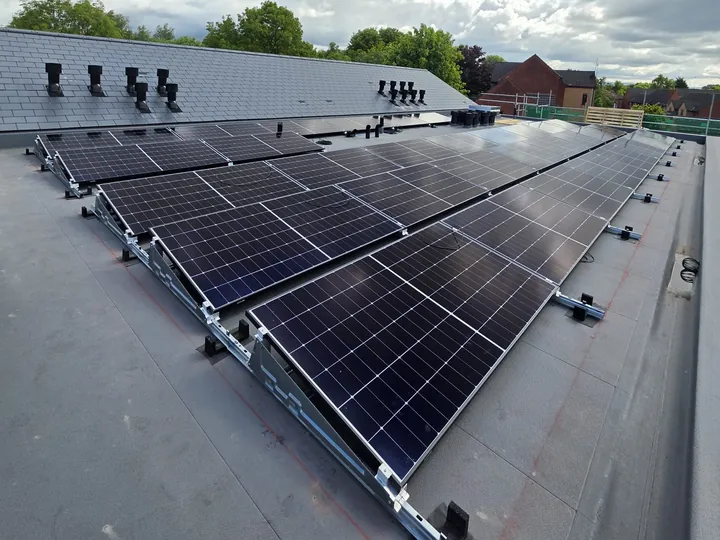
That is where RC62, published free by the Fire Protection Association, comes in. Version 2 came out in 2023, developed through RISCAuthority with MCS and Solar Energy UK, and it’s aimed squarely at larger commercial and industrial rooftop systems. It covers the whole life of a project, from choosing the roof to what to do after a fire. It is also candid about its own limits. It says it doesn’t represent a pan-insurer view, and that each insurer may set its own requirements.
So treat RC62 as the common language, not the rulebook. Some insurers will send its checklist and ask you to tick through it. Others will add their own conditions. When we design commercial solar panels for Greater Manchester businesses, we assume the insurer will read the drawings and plan for that from the first survey.
What sits under the panels: roof build-up and fire walls
The first thing an underwriter wants to know is what the array is sitting on. RC62 says arrays should go on non-combustible roofs, rated A1 or A2-s1,d0 under BS EN 13501-1. It adds that a new array mustn’t lower the roof’s fire classification, and that a fire-resistant covering should go on where a combustible roof can’t be avoided.
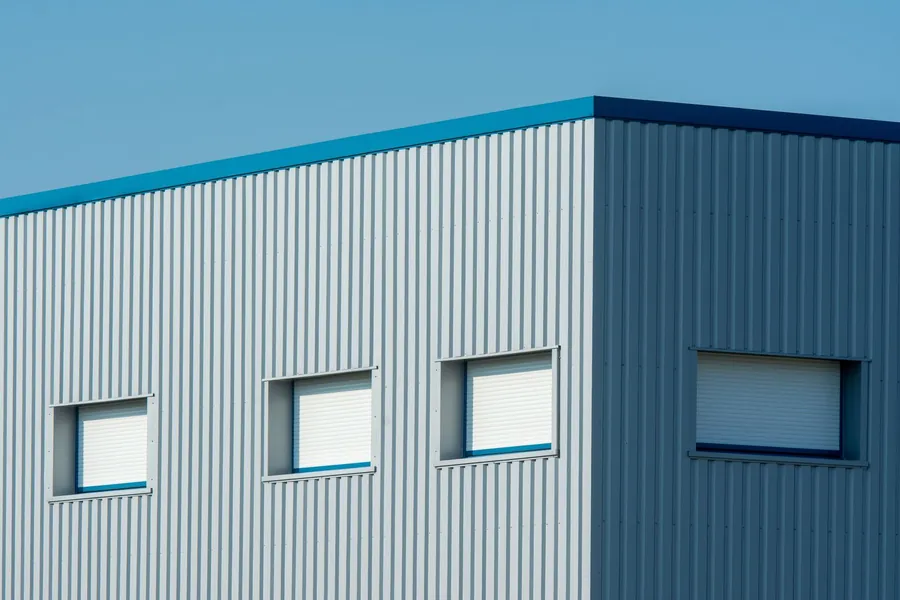
That matters in Greater Manchester because the building stock is so mixed. A lot of the sheds built since the 1990s on estates like Trafford Park, Heywood and Logistics North use composite insulated panels. Insurers will ask what the core is, whether it’s PIR, mineral wool or an older polystyrene type, and whether the panel holds a fire certification. Flat roofs on offices, schools and newer units are often a membrane over insulation that has combustible elements somewhere in the build-up. Former cotton mills in Oldham, Rochdale and Bolton bring timber roof structures into the picture.
Two more points tend to come up. The first is compartment walls. RC62 wants 2.5 metres of panel-free roof each side of a compartment or fire wall, dropping to 1.2 metres where the roof is non-combustible and the panels have a low tendency to spread flame. An array mustn’t run straight across a fire wall.
The second is the gap under the panels. A government-commissioned research review on roof fires involving solar panels concluded that the space between panel and roof can trap heat and push flame along the roof surface. It recommends non-combustible coverings beneath arrays.
Not everyone accepts RC62’s line on roofs. In July 2025 the NFRC and other roofing and solar trade bodies published a position paper on RC62 and flat roofs. It asks for a more risk-based reading, judging the whole roof system on test data rather than on the rating of each material. RISCAuthority has since opened a consultation with a view to updating the code. Until a new version is out, your insurer’s view of your particular roof is the one that counts.
DC isolation, fire service switches and shutting the array down
Firefighters can isolate a building’s mains supply at the intake. That doesn’t make a solar array safe. Panels keep producing DC voltage whenever light falls on them, and RC62 points out that includes the floodlights a fire crew may set up at night. The cables from the roof to the inverters can stay live while a fire is being fought.
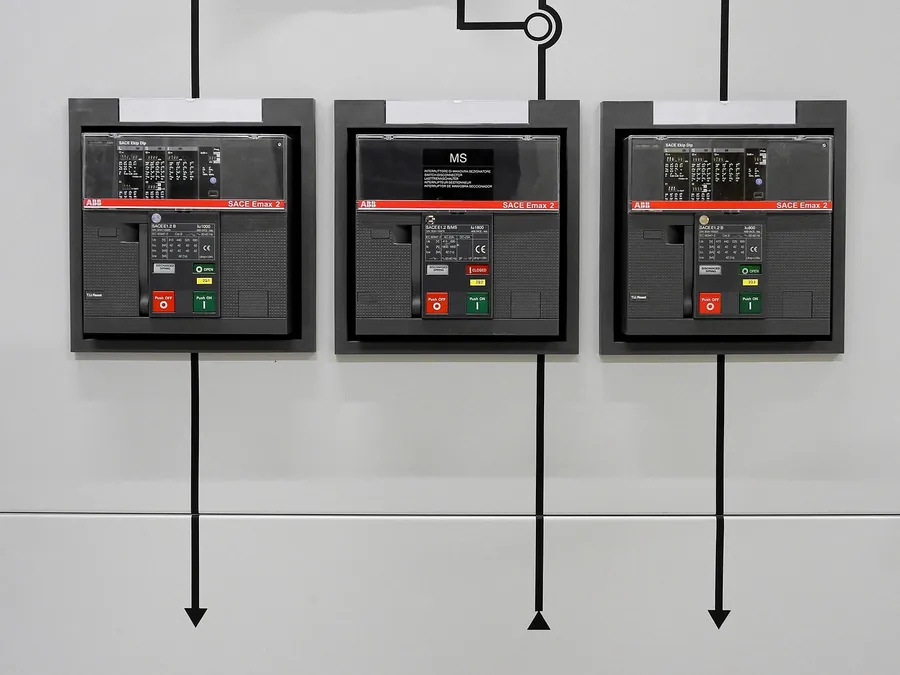
Insurers will ask how that is handled. RC62’s answer depends partly on voltage. Under BS 7671, low voltage tops out at 1,500 V DC between conductors and 900 V DC between a conductor and earth. If a system’s design can exceed that, which depends on string length and how the inverter references DC to earth, RC62 expects extra measures. Examples include a ground-level switch that isolates the strings at the modules, or module-level power electronics that drop to extra-low voltage when the AC supply goes off.
Separately, where BS 7671 requires one or the insurer asks for it, RC62 describes a “fire service switch”. It’s a DC switch-disconnector placed somewhere prominent and safe, away from the array, which at minimum leaves the DC wiring inside the building voltage-free. It sits alongside the normal isolators and should be tested and recorded at each routine maintenance visit. You may also hear “rapid shutdown”. That’s a US electrical code requirement, not a UK one, though optimisers and microinverters do a similar job.
Two smaller items insurers often check. First, a “PV on the roof” sign at least 100mm square at the consumer unit or the supplier’s cut-out, because crews can’t always see the panels from the ground. Second, fewer DC isolators, not more. RC62 says to leave them out wherever possible, many inverters now have one built in, and isolators feature heavily in the fire data it cites.
Cable routes through the building
Once DC cables leave the roof, they become part of the building’s fire risk. RC62 asks for the internal DC route to be as short as possible. Where cables pass through areas people use, it wants mechanical protection, such as a covered cable tray, so a firefighter or a forklift doesn’t meet a live cable.
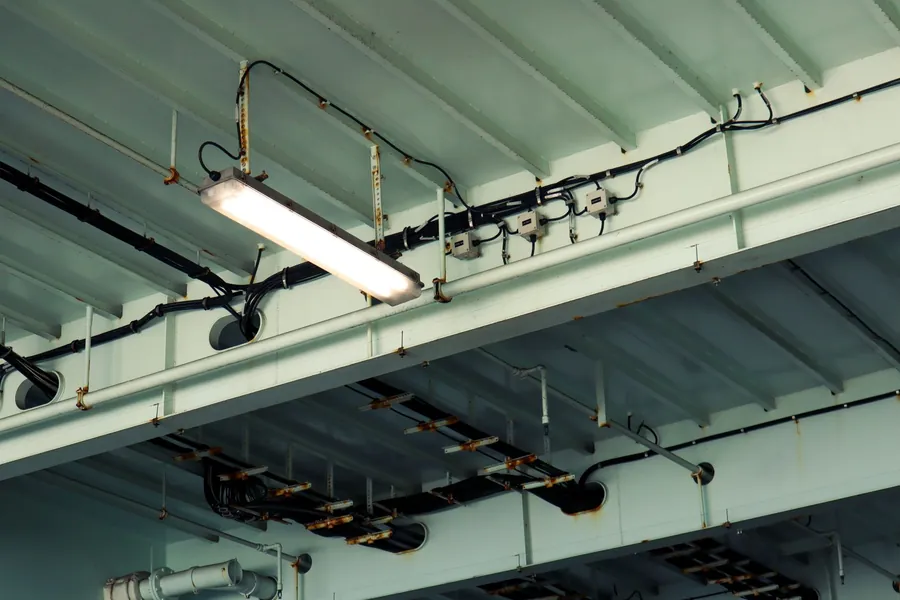
On a typical Greater Manchester warehouse, where the inverters go decides how much live DC cable runs through the building. Inverters on the roof or on an outside wall near the array keep DC runs short, and AC runs to the main switchroom. Inverters in a ground-floor plant room mean longer DC runs through racking aisles or office ceilings. Either can work. The insurer simply wants to see that someone chose the route on purpose.
The cable rules that come up most are:
- Cables that cross a compartment wall should go through a fire-resistant duct or shaft, with the penetration fire-stopped.
- Rooms holding inverters, isolators and distribution boards should have automatic fire detection. RC62 also recommends considering sprinklers in those areas.
- Inverters give off heat in normal running, around 3% of what they convert, so keep their ventilation clear of stored stock.
- Connectors from different manufacturers must never be mixed. RC62 points out that international standards don’t allow it, and badly made or mismatched connectors are a leading cause of PV fires.
Battery storage: where it goes and what it’s kept away from
Adding a battery changes the insurer’s questions completely. A lithium-ion cell that fails can overheat, give off flammable gas and set off its neighbours, and that’s a different hazard from anything on the roof. RC62 is about solar. For batteries, RISCAuthority publishes a separate guide, RE1, on commercial lithium-ion battery installations, and the design itself should follow the IET Code of Practice for Electrical Energy Storage Systems.
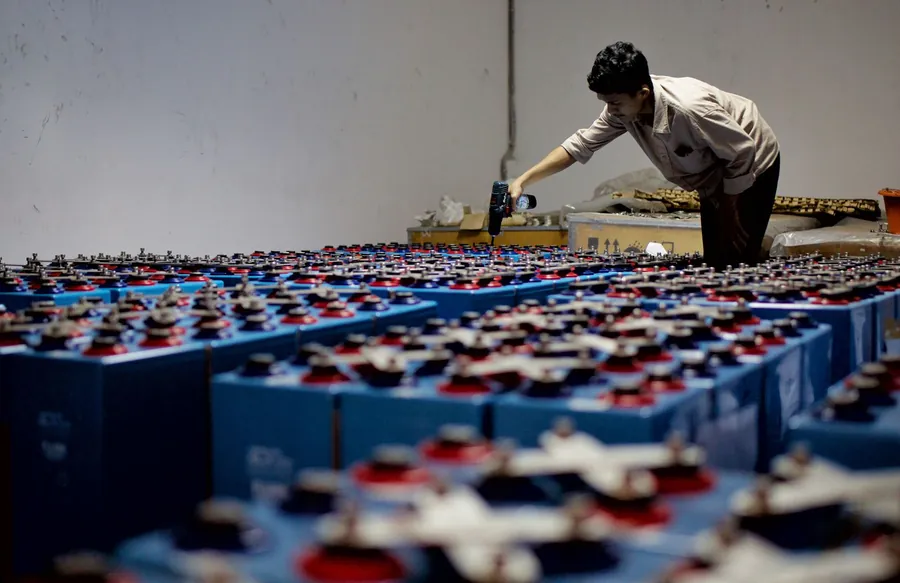
Most of the conversation is about location. Expect the insurer to ask:
- Is the battery indoors or outside? If it’s indoors, is it in its own fire-resisting room, and what shares a wall with it?
- How far is it from stock, loading bays, escape routes and neighbouring buildings?
- Is there detection inside the enclosure, and does it link to the building’s fire alarm?
- How is gas vented if a cell fails, and how does the fire service reach it and shut it down?
- What chemistry is it, and what fire test data does the manufacturer have?
A self-contained outdoor cabinet or container on a concrete pad, set back from the building, is usually the easiest option to insure. That’s not always possible on a tight urban yard in Salford or Cheetham Hill, which is why the location should be agreed with the insurer before the battery is ordered. We go through the commercial case for storage in whether battery storage is worth it for a Manchester business, and siting is one of the first things we look at on a commercial battery storage survey.
Inspection regimes, thermal imaging and the paperwork insurers like
RC62 and Solar Energy UK’s maintenance manual both set the floor at an inspection by a competent person at least once a year. RC62 also wants checks after severe storms. Product failure is the second most common cause of PV fires after installation faults, so the aim is to catch a fault while it’s still a warm connector, not a burn mark.
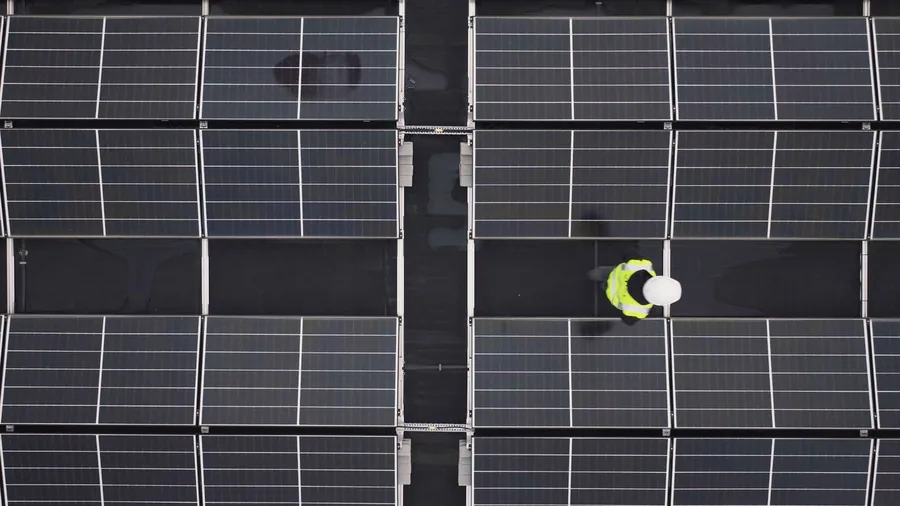
A visit that will satisfy an underwriter covers four things:
- A visual check of connectors, cable supports, isolators and inverters
- Insulation resistance testing and, increasingly, string series resistance checks
- A thermal survey, often by drone where walking the roof isn’t safe
- A note of anything found and when it was fixed
Thermal imaging is the useful part. A hot spot on a module or a connector running warm shows up clearly. RC62 notes that bird droppings in particular cause partial shading and hot spots. On a damp Manchester roof with a pigeon population nearby, that’s a real issue, and so is moss and lichen growing under shallow-pitched arrays. RC62 also says cleaning should be done by people trained for solar panels, not a general window cleaner. Our guide to commercial solar maintenance contracts in Manchester sets out what a good annual plan includes and costs.
Then keep the paperwork. A renewal goes far more smoothly when you can send the commissioning certificate, each year’s test and thermal reports, and proof that faults were put right.
How to brief your insurer before installation starts
The easiest projects are the ones where the insurer sees the design while it can still change. RC62 recommends talking to the property insurer at the planning stage. It also recommends involving the local fire authority where the project calls for it. In Greater Manchester that’s Greater Manchester Fire and Rescue Service, and on big sites RC62 suggests inviting crews in to see where everything is.

A good pack for the insurer or broker includes:
- Roof layout drawings showing the array, compartment walls, rooflights, access routes and clear zones
- The roof build-up and insulation type, with any fire certification for the panels
- The structural report, including ballast weight where the array isn’t mechanically fixed
- The isolation strategy: inverter positions, DC cable routes and any fire service switch
- Battery details, location and separation, if storage is included
- The installer’s credentials. RC62 suggests MCS certification, ISO 9001, SSIP membership such as CHAS, and professional indemnity cover suited to the job
- The planned maintenance and inspection schedule
- Who owns the system and who insures it, which matters on rented buildings. We covered that in our guide to solar on a leased building in Greater Manchester.
Don’t forget the work itself. RC62 says the installer’s team should be told what the site’s fire alarm sounds like and what to do when they hear it. Waste should be cleared at the end of each shift. It also says hot work, such as torch-on membrane repairs, shouldn’t happen near an array unless it can’t be avoided, and then only under a permit. Pass that on to whoever looks after your roof.
Frequently asked questions
Do we have to tell our insurer before fitting solar panels to a commercial building?
In practice, yes. A rooftop array adds an electrical generator to the building, changes the fire risk and raises the rebuild value, and most commercial property policies expect you to disclose a material change like that. RC62 itself recommends discussing the project with the property insurer at the planning stage. If you lease the building, the landlord's insurer usually needs to hear about it too. Telling them after a claim is the worst time to find out they had conditions.
Is RC62 a legal requirement for commercial solar?
No. RC62 is guidance written through RISCAuthority, the insurer-backed research group, and published by the Fire Protection Association with MCS. Using it is voluntary, and the document says individual insurers will have their own requirements. An insurer can still make parts of it a condition of your cover. The legal duties come from elsewhere: a fire risk assessment under the Regulatory Reform (Fire Safety) Order 2005, electrical work to BS 7671, and the CDM 2015 regulations for the installation itself.
Can solar panels go on a roof with insulated panels or a combustible flat roof?
Often, but expect questions. RC62 says arrays should sit on non-combustible roofs, rated A1 or A2-s1,d0 under BS EN 13501-1, and that a fire-resistant covering should go on if a combustible roof can't be avoided. Many flat roofs and some composite panels don't meet that on paper. Roofing and solar trade bodies have argued for a more risk-based reading of the code, and RISCAuthority has opened a consultation on updating it. What matters for your project is what your own insurer will accept, so get the roof build-up to them early.
How often should a commercial solar array be inspected for fire risk?
At least once a year by a competent person, which is the minimum RC62 and Solar Energy UK's maintenance guidance both point to, plus a check after any severe storm. A useful annual visit covers the connectors, isolators, cable supports and inverters, insulation resistance testing, and a thermal survey to pick up hot spots. Keep the reports, because insurers increasingly ask to see them at renewal.
Thinking about solar or a battery for your site?
Send us a year of half-hourly data and we'll tell you, in writing, what size of system makes sense and roughly what it would save. Manchester, Salford, Trafford, Bolton, Wigan and in between.