
26 October 2026
Commercial Solar For Warehouses And Factories In Greater Manchester
Solar for warehouses, factories and industrial units in Greater Manchester: daytime loads, shed roofs, leased units, forklifts, EV fleets and honest payback.
A warehouse is about the easiest building in Greater Manchester to make a case for solar on. It has a big, plain roof, it runs lights, conveyors, compressors and chargers right through the working day, and it usually pays a business tariff that makes every unit you don’t buy count. Factories are much the same, often with heavier loads. The county has plenty of both. Trafford Park, opened in 1896 and widely described as the world’s first planned industrial estate, still houses well over a thousand businesses. Further out, the big distribution sheds at places like Heywood Distribution Park sit a couple of miles off junction 19 of the M62. That doesn’t mean every shed is a good candidate, though. Roof age, the lease, shift patterns and what you run after dark all change the answer, so here they are one at a time.
Why commercial solar suits warehouses and factories in Greater Manchester
Solar makes most of its power between mid-morning and mid-afternoon. That’s the window when a typical warehouse or factory is busiest. A site that’s working while the panels are generating uses the power itself, and a unit you use yourself is worth your full import rate rather than whatever an export tariff pays.
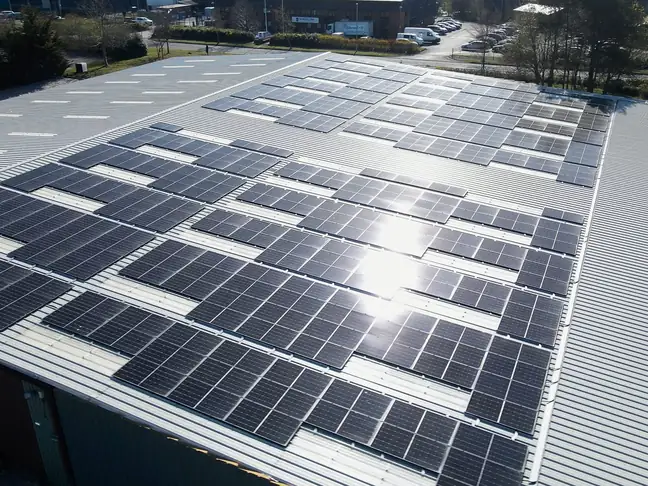
Compare that with an office that empties at half five, or a pub that’s busiest after dark. Industrial users tend to have a steadier daytime base load: lighting in a high-bay shed, refrigeration in a cold store, air compressors, extraction fans, packing lines and battery chargers. The flatter and fuller that daytime demand is, the more of the array’s output stays on site.
The roof matters too. A shed of several thousand square metres has room for a system big enough to make a real dent in the bill, and on a modern clad building the panels can often go on without much fuss. Our commercial solar panel installation service starts with exactly this comparison: what the building uses, hour by hour, against what the roof could produce.
Sizing warehouse solar to what the site actually uses
The common mistake is to fill the roof and work out the sums afterwards. On a big shed that can mean an array far larger than the building’s daytime demand, with a lot of the output exported at a fraction of the price you pay to import.
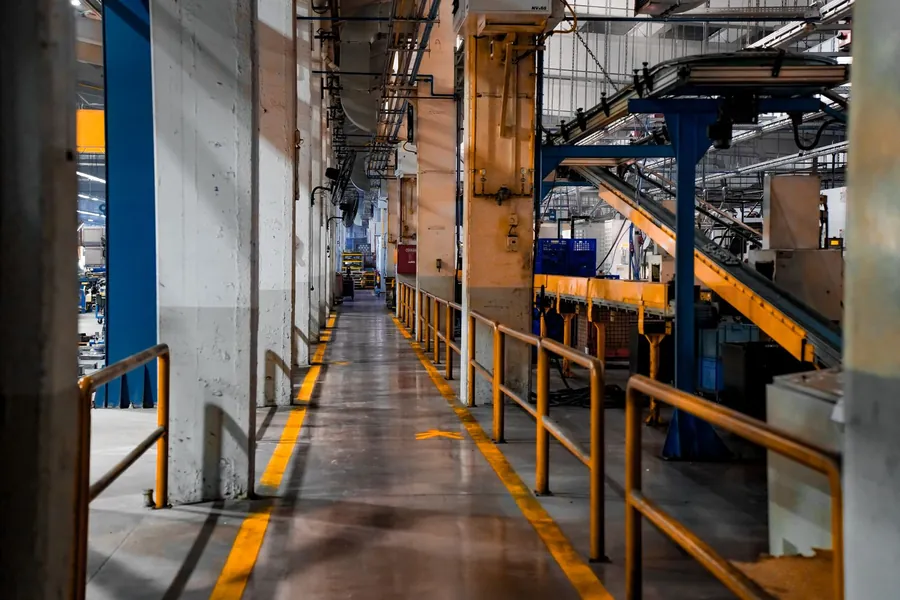
The better starting point is your half-hourly meter data, which most sites of this size already have through their supplier or the meter operator. It shows what the building draws at 11am on a June Tuesday and at 2pm on a December Saturday. Lay a solar generation profile over the top and you can see how much would be used on site and how much would spill out.
Weekends need thinking about early. If the site shuts on Saturday and Sunday, around two-sevenths of the year’s generation lands when nobody’s there. Shutdown weeks at Christmas and in summer add to that. A two-shift factory or a 24-hour distribution centre has much less of this problem than a single-shift engineering firm.
To get a rough idea of yield, the European Commission’s PVGIS solar yield calculator lets you drop a pin on your building and test different tilts and orientations. Across Greater Manchester it typically gives somewhere around 800 to 900 kWh a year for each kWp installed, depending on the angle. A modern panel of roughly 450 watts covers about two square metres, so allow something like 4.5 square metres of panel per kWp before rooflights, edge zones and maintenance walkways take their share.
Profiled steel, composite panels and fibre-cement: industrial roof types
What sits on top of your building affects cost, timing and sometimes whether the project goes ahead at all. Broadly, industrial roofs in the county fall into three groups.

Profiled steel sheet
Single-skin or built-up with insulation, this is the most common covering on sheds from the 1980s onwards. Brackets clamp to the ribs or fix through to the purlins, and the work is quick. The things to check are the sheet gauge, the condition of the coating at the laps and cut edges, and where the rooflights are, because nobody should be working near those without protection.
Composite insulated panels
These are standard on newer distribution buildings. Structurally they’re usually straightforward. Insurers take a close interest in what the panel core is made of, though, which we come back to below.
Fibre-cement sheets
Many of these are asbestos cement on buildings from before 2000, and they’re still common on older estates. They’re fragile, they shouldn’t be drilled for rails, and the usual answer is over-cladding with new steel sheets or replacing the roof first.
Loading and the structural survey
Whatever the covering, anything beyond a small array needs a structural engineer to check the purlins, the frame and the fixings against the extra weight, wind uplift and snow. Older portal frames were often designed with little spare capacity. We go into loading, asbestos and remaining roof life in much more depth in our roof check for commercial solar, so read that before you budget for anything.
Leased industrial units: landlords, tenants and the roof
A lot of industrial space in Greater Manchester is rented, often on multi-let estates where the landlord keeps control of the roof and the structure. That’s where plenty of solar projects stall. Not on engineering, but on who is allowed to do what.
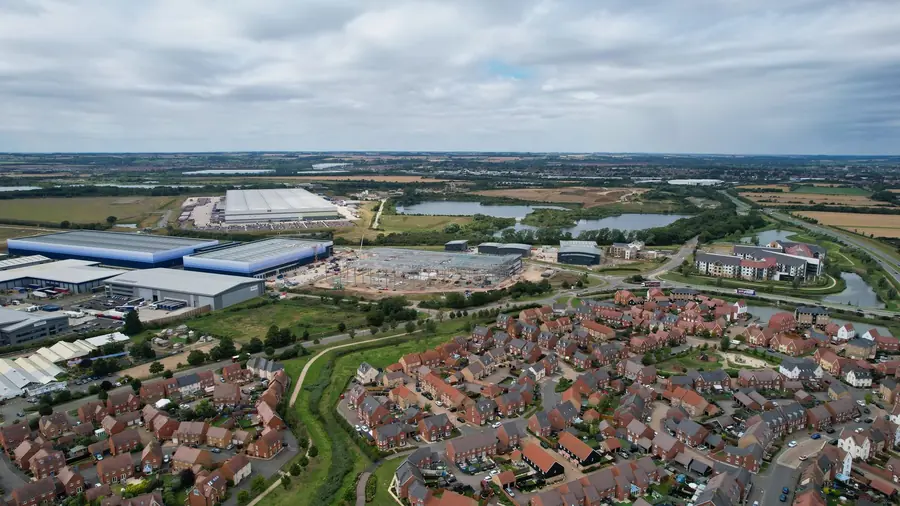
Start with the lease. Check whether the roof is part of your demise at all, and what the alterations clause says about structural work and fixings through the roof. Where alterations need the landlord’s consent, the Landlord and Tenant Act 1927 generally stops consent being unreasonably refused for improvements, but that’s no substitute for a solicitor reading your particular lease. In practice there are three common routes:
- The tenant installs and owns the system under a licence for alterations, which should cover access, insurance, maintenance and what happens at the end of the lease.
- The landlord installs the system and sells the electricity to the tenant, usually at a rate below the tenant’s grid tariff.
- A third-party funder installs under a power purchase agreement, with a roof lease or licence from the landlord and a supply agreement with the tenant.
Lease length matters as much as the paperwork. If you’ve four years left and a break clause in two, owning panels that take longer than that to pay back is a gamble unless the licence lets you leave them in place for a payment, or take them with you. Landlords have their own reason to say yes. Under the government’s minimum energy efficiency standard for rented commercial property, every privately let non-domestic building has needed an EPC of at least E since April 2023, and on-site generation can help a unit’s rating. Our guide to buying, leasing or using a PPA for commercial solar sets out how each funding route treats ownership.
Forklifts, electric vans and when a battery earns its place
Most warehouses switched to electric forklifts years ago. Delivery vans and pool cars are now following. Every one of them adds load, and the hour it lands matters as much as the size of it.
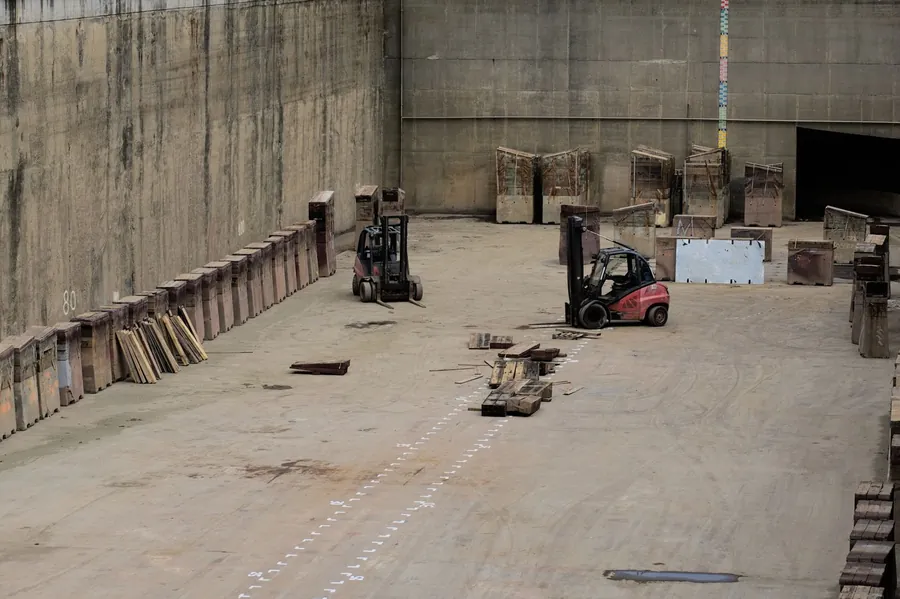
Forklifts with lithium-ion batteries can usually be topped up during breaks rather than charged in one long overnight session. That puts their charging in the middle of the day, right when the panels are at their best. Older lead-acid trucks tend to go on charge at the end of a shift instead, often in the early evening.
Vans are harder. A fleet that goes out at 7am and comes back at 5pm wants its charging after the sun has gone down. Without storage, that charging runs almost entirely on grid power. A battery charged from midday surplus can carry some of the solar into the evening and help keep your peak demand down at the expensive end of the day. Whether it pays depends on your tariff and capacity charges, which our article on whether battery storage is worth it for a Manchester business works through in detail. If the vans park in a yard or car park, solar carports over the bays are another option that leaves the roof for the building’s own load.
Cost and payback for warehouse and factory solar
We’d rather be straight about this than throw out a tidy number. The government’s published cost data comes from MCS records and stops at 50kW. Most warehouse and factory arrays are bigger than that, so there’s no official per-kW price to quote for them.
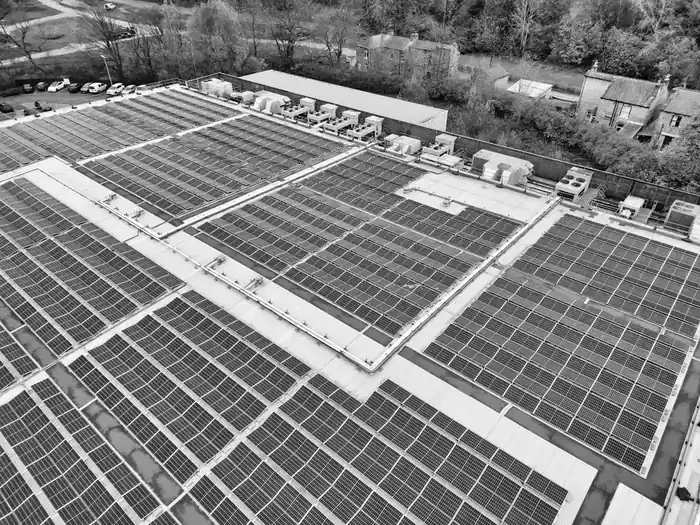
What you can say with confidence is that the price per kW usually falls as an array grows, because surveys, design, scaffold, the grid application and commissioning cost much the same whether you fit 100 panels or 1,000. Against that, industrial jobs carry their own extras: roof repairs or over-cladding, strengthening steelwork, longer cable runs to the main switchroom and, on the largest systems, a high-voltage connection or export limits imposed by the network operator. Our breakdown of commercial solar panel costs in Manchester covers the published figures and the line items in more detail.
Payback on a shed comes down to one sum. Take the units you’ll use on site multiplied by your real unit rate, add the units you’ll export multiplied by the export rate, and divide the installed cost by that yearly total. Raise the share used on site from, say, half to three-quarters and the yearly saving jumps, because each extra unit is now worth your import rate instead of the export rate. That’s why sizing to demand beats squeezing the last panel onto the roof. Be wary of any proposal that assumes every unit replaces grid power at your headline tariff.
Insurers, fire safety and installing around a working site
Before any work starts, tell your buildings insurer, or ask your landlord to, if they hold the policy. Insurers set their own conditions for rooftop solar on commercial buildings, and some will want to approve the design before it goes on the roof.
Much of what they ask for comes from RC62, the joint code of practice on fire safety with PV panel installations. It was written by RISCAuthority and MCS with Solar Energy UK and is published free by the Fire Protection Association. It covers commercial rooftop systems specifically. It expects things like clear DC isolation, sensible cable routes through the building, gaps for firefighter access and a proper inspection and maintenance regime. Roofs with combustible insulation get particular attention, and the roofing industry has pushed back on parts of its flat-roof guidance, so expect your insurer to have its own view.
Then there’s the site itself. Lorries on the dock, forklifts in the yard and staff below the roof all need planning around. A sensible installer will phase the work, keep lifting zones away from loading bays and agree hours that suit your shifts. The electrical tie-in usually needs a short planned shutdown of part of the supply. Get that booked into a quiet weekend or a maintenance window early rather than finding out the week before.
What to have ready before a site survey
The more of this you can pull together before the first visit, the faster you’ll get a design and a price that holds up.

- Twelve months of half-hourly consumption data, plus your current unit rates and any capacity or standing charges.
- The MPAN from your electricity bill and your agreed supply capacity in kVA.
- Building drawings, roof specifications or anything left over from a previous refurbishment.
- The asbestos register, if the building is old enough to need one.
- The lease, or the landlord’s contact details, if you rent.
- Your insurer’s name and any conditions they’ve already mentioned.
- Plans that will change your demand, such as a new production line, more refrigeration or switching vans to electric.
With that in hand, a survey can look at the roof, the switchroom and the cable route with your real numbers in front of it, not guesses. If you run a warehouse, factory or industrial unit anywhere in Greater Manchester, book a site survey for your building and we’ll start with your meter data.
Frequently asked questions
Is solar worth it for a warehouse that's closed at weekends?
It can be, but plan for the gap. Two days in seven is roughly two-sevenths of the year's generation arriving when nobody is using it. You can size the array to your weekday load, export the weekend surplus, or store some of it in a battery for Monday morning. Your half-hourly meter data will show which of those makes sense.
Can a tenant put solar panels on a leased industrial unit?
Usually only with the landlord's written consent, because the roof is normally either outside the tenant's demise or covered by the lease's alterations clause. The usual routes are a licence for alterations letting the tenant install, the landlord installing and selling the power to the tenant, or a third-party PPA that both sides sign up to. Agree up front what happens to the panels when the lease ends.
Does a warehouse or factory roof need a structural survey before solar goes on?
For anything bigger than a small array, yes. A structural engineer should check the purlins, frame and fixings against the added weight, wind uplift at the edges and corners, and snow. Older portal-frame sheds and anything with fibre-cement sheets are the ones most likely to need strengthening, over-cladding or a re-roof first.
Can rooftop solar charge electric forklifts and delivery vans?
Yes, but timing decides how much. Forklifts that opportunity-charge during breaks and pool vans parked through the day can draw straight from the panels. Vans that come back at teatime and charge overnight need a battery to carry daytime solar into the evening, or they'll mostly run on grid power.
Thinking about solar or a battery for your site?
Send us a year of half-hourly data and we'll tell you, in writing, what size of system makes sense and roughly what it would save. Manchester, Salford, Trafford, Bolton, Wigan and in between.