
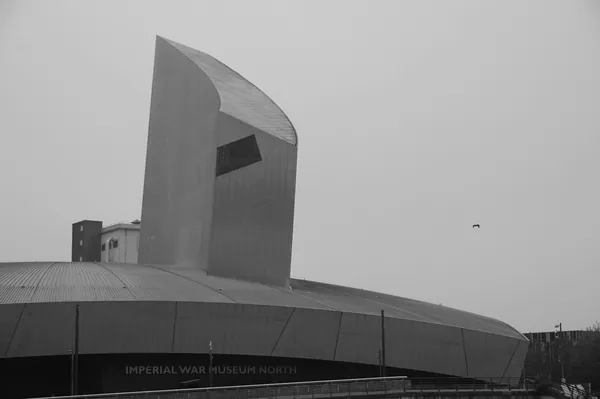
IWM North
Daniel Libeskind's shard-shaped Imperial War Museum North sits on Trafford Wharf Road beside the Ship Canal, with free entry to its displays on how conflict has shaped people's lives since 1914.
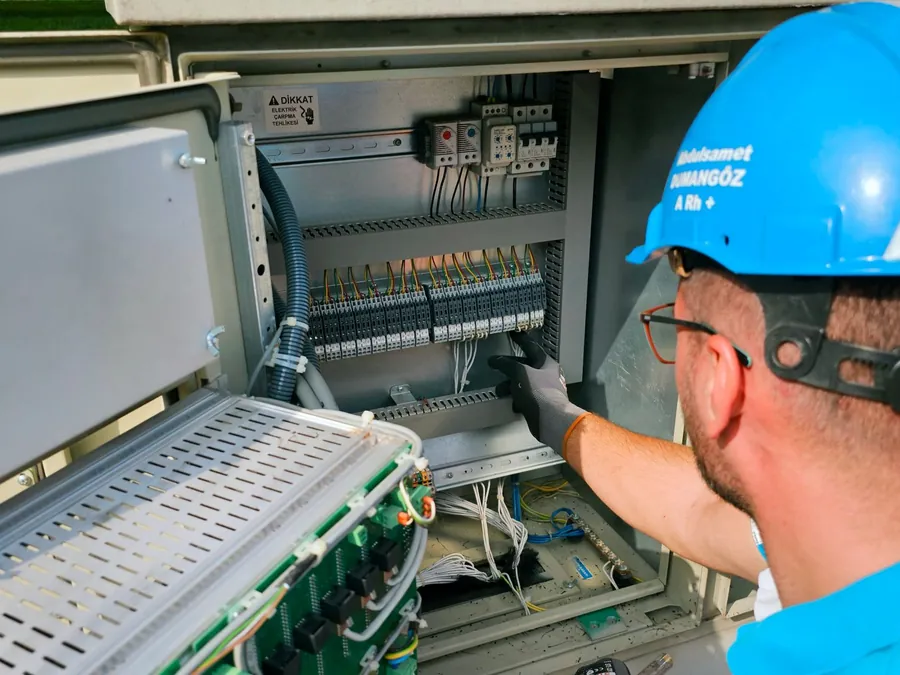
Learn more about IWM North on Google MapsA lot of the arrays we're asked to look after in Trafford Park came with the building rather than with the business. The previous occupier had panels fitted, the lease changed hands, and the new tenant found a grey inverter box on the wall and no instructions. Sometimes nobody is even sure whether it belongs to the landlord or the tenant. So solar panel maintenance on the Park starts with a plain question: whose system is it, and who is meant to keep it working? Once that's settled the technical side is ordinary enough. We read the generation against what the roof should be producing, test each string, put a thermal camera over the panels and connections, and check the isolators and cabling. Our yard is on Trafford Wharf Road, so most units on the estate are a short drive away when a fault needs someone on the roof.
We reply within one working day to book a site visit.
When I'm asked to look at a system on a leased Trafford Park unit, there's often no design to check it against. So I rebuild one. From the panel count, the strings and the way the roof faces, I work out what it ought to be producing, then compare that with the meter. The size of the gap tells me where to start.
I've spent over twenty years in commercial and residential solar, and those calculations are the part I'm best at. They're what turns a vague worry about the bill into a specific fault we can fix. We arrive at the time we agreed and treat a building you may not own with care.
- Thomas
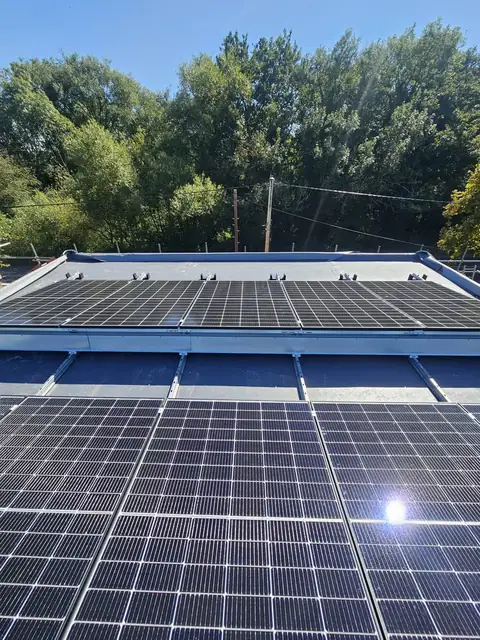
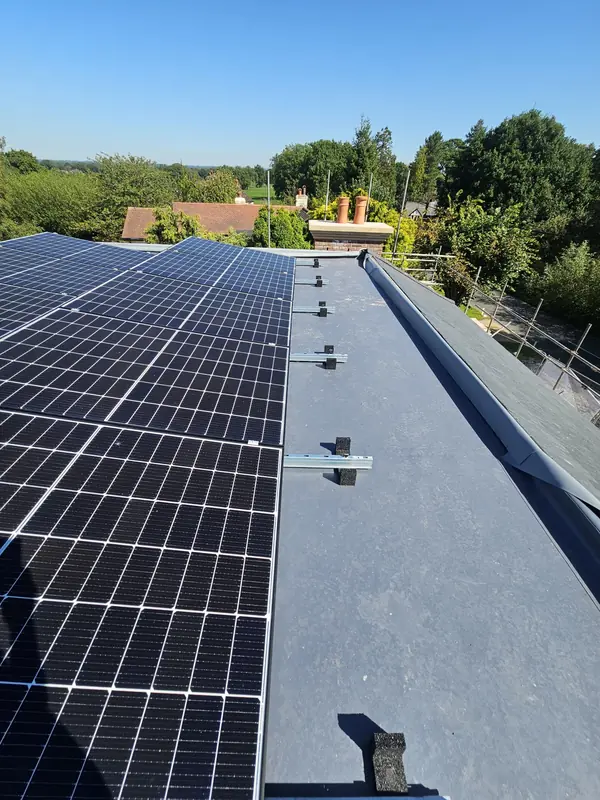
On a leased unit the panels are only part of it. Half the value is in the paperwork and in knowing who to ring.
01
Leases on the Park vary. Some make the tenant responsible for plant on the roof, some leave it with the landlord, and plenty say nothing at all about solar. We work to whichever party is responsible and send the report to both if you ask, so nobody can say later that they weren't told.
02
If you leave before the array reaches the end of its life, the next occupier or the landlord will want to know its condition. A run of dated inspection reports shows the system was looked after and makes dilapidations talks shorter.
03
Clad logistics sheds near Barton Dock Road carry big arrays, and one dead inverter on a system that size can take out a large slice of generation without anyone in the warehouse noticing. Remote monitoring between visits flags the drop within days.
04
Units along Mosley Road and Nash Road may still have fibre-cement sheeting under the panels. We confirm the roof type before going up, set out walkways and edge protection, and keep that access plan on file so each later visit starts from it.
05
We log each inverter's error history and efficiency at every visit. When one is clearly near the end, you get enough notice to budget for it, and to agree with the landlord whose budget it comes from.
06
If storage was added later, the same engineer can test it, read its charge and discharge logs and check the ventilation and isolation in one trip rather than two separate call-outs.
£0
Site survey and a review of your half-hourly data
kWh
Systems sized from your own meter readings
G99
Grid application drawn up and submitted for you
M17
Based on Trafford Wharf Road, Trafford Park
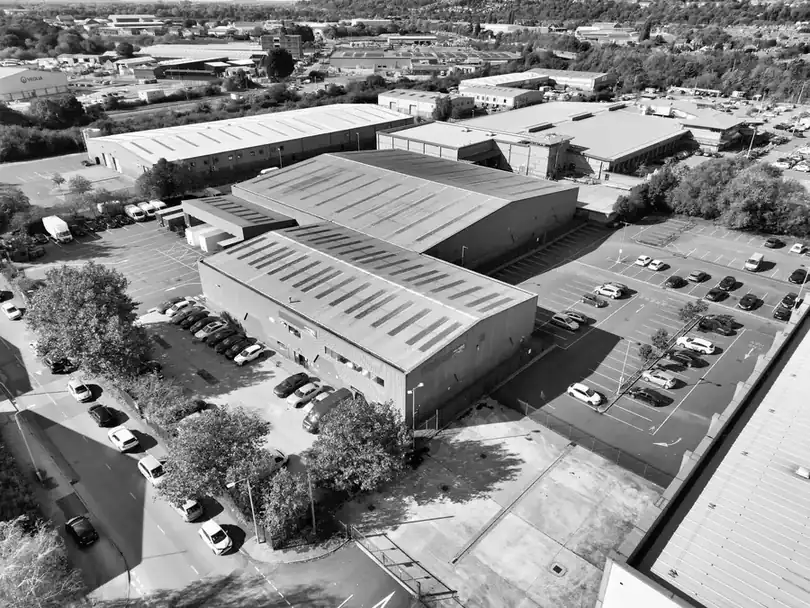
Maintenance on the Park changes with the building. The 1920s brick warehouses near Trafford Road tend to have small arrays split around parapets and old roof lights, where debris collects in corners and cable runs have often been rerouted by someone who has since left. On the mid-century sheds, the work is planned around fragile sheets, and nothing gets walked on until it has been identified.
The modern portal-frame units off Europa Way and Ashburton Road West are easier to get onto but bigger to cover. With several hundred panels, a thermal survey and full string testing is a long day, so we split it into sections and leave the rest of the array running while each part is isolated.
If your unit's array exports more than it should at weekends, a battery may be worth a look; see commercial battery storage in Trafford Park for how we size one on a leased building.
"On the Park, the first job on an inherited array is often working out who owns it. The second is finding the monitoring login, which usually left with the old tenant."
Before booking, we check whether the landlord or the managing agent needs to approve roof access and whether they hold drawings, certificates or a roof survey we should read first.
From panel count, tilt and the direction the roof faces we model monthly output and set it against your meter or inverter readings. A big gap moves the visit up the list.
Fragile sheets, roof lights and unguarded edges are marked out, and walkways or edge protection go in before anyone steps off the access ladder. On a busy yard we agree where the access sits so it doesn't block a loading bay.
We look for cracked glass, slipped clamps, chafed cables and debris under the panel edges, then take thermal images of panels, connectors and DC isolators while the system is generating.
Each string is measured for voltage and current and tested for insulation resistance. We also check the inverters, AC isolation and earthing, and record the results so the next visit can show any trend.
Panels are washed with purified water and a soft brush where the data says soiling is costing output. Connectors, clamps and small cable faults are usually put right on the day.
You get photos, thermal images, test sheets and a list of actions in order of priority. If both parties want a copy, both get one, and the next visit is booked before we leave.
There are two layers of cover on a commercial installation, and it pays to know which is which. The first is the installer's workmanship guarantee. It covers the way the system was put in: the fixings through your roof, the cable runs, the terminations, the protective devices and the commissioning settings. Its length and terms are written into the quotation, so you can read them before you sign rather than discover them afterwards.
The second layer belongs to the manufacturers. Panels normally carry a product warranty and a separate performance warranty, which promises a minimum output after a set number of years. Inverters and batteries have their own terms, often with cycle or throughput limits on storage. These vary by product, so every proposal names the exact models and attaches their warranty documents.
A guarantee is only as good as the install underneath it. That's why the structural check comes before the design is fixed, why every string is tested and recorded to BS 7671, and why the grid connection is commissioned to the settings SP Electricity North West has approved. If something we fitted fails because of how it was fitted, we come back and put it right.
In writing
Workmanship guarantee, set out in your quote
Per model
Manufacturer product and performance warranties
Test results, drawings, warranty certificates and the grid connection agreement are handed over in one pack on the last day.
Most units on the estate fit one of these patterns, and leased buildings lean towards the first because nobody owns the problem. This is what each tends to mean for the array.
| Comparison point | No arrangement | Call-out when it fails | Planned O&M |
|---|---|---|---|
| Who spots a fault | Usually the finance team, via the bill | Whoever notices the inverter screen | Monitoring alerts and scheduled tests |
| Likely downtime | Months | Weeks | Days |
| Insurer evidence | None | Repair invoices only | Dated test and thermal records |
| Cleaning | Rain only | When someone remembers | Scheduled to suit the site |
| Inverter end of life | Comes as a surprise | Comes as a surprise, but faster to fix | Planned and budgeted |
| Cost pattern | Nothing until a big bill | Unpredictable | Fixed, known in advance |
We price after seeing the system, either per visit or as an annual plan. These are the things that make one Trafford Park job cost more than another.
A clean steel roof off Barton Dock Road with a fixed ladder is quick to get onto. A fibre-cement shed on Mosley Road needs walkways and edge protection set up each time, which adds hours.
Testing scales with the number of strings. A large logistics roof takes longer than a small warehouse array, though the cost per panel usually falls as the system gets bigger.
If there are no drawings or certificates, the first visit includes tracing and labelling the system as found. That is a one-off cost, and every visit after it is shorter.
Sites that run deliveries all day may need access out of hours or in agreed windows, so our team isn't putting a ladder up beside a reversing trailer.
Not usually for maintenance. Like-for-like repairs that don't materially change how the building looks aren't treated as development. Adding panels or relaying the array into a larger one is different: it falls back under Class J permitted development, and anything over 50 kW needs prior approval from Trafford Council on design and glare. Listed buildings sit outside Class J, so check with the council first if yours is one.
The lease decides, and a lot of Trafford Park leases are vague on it. Look for clauses on landlord's fixtures, roof plant and repairing obligations, and ask the landlord's agent whether a roof licence or a separate power agreement exists. We can maintain the system for either party, but it helps to have that settled before the first invoice.
Often, on the lower-tilt arrays. Dust from yards, HGV traffic and the roads around the Park settles on the glass, and on shallow roofs rain tends to move it to the bottom edge instead of washing it off. We decide from output figures and a look at the panels rather than cleaning to a fixed calendar.
Yes, and on the Park it's a common request. We identify the panels, inverters and protection, test the whole system, and write up the drawings and records you should have been given. If the monitoring account sat with the old installer, the inverter maker can often move it to you, or we fit a separate logger.
No. Isolating the solar doesn't cut your supply from the grid; the building simply buys more power for those hours. We isolate one section at a time where we can, so most of the array keeps generating while we test the rest.
Daniel Libeskind's shard-shaped Imperial War Museum North sits on Trafford Wharf Road beside the Ship Canal, with free entry to its displays on how conflict has shaped people's lives since 1914.
Learn more about IWM North on Google Maps
The ornate Trafford Centre shopping and leisure complex, opened in 1998, sits at the western end of Trafford Park off the M60, with shops, restaurants, a cinema and the Trafford Palazzo next door.
Learn more about Trafford Centre on Google Maps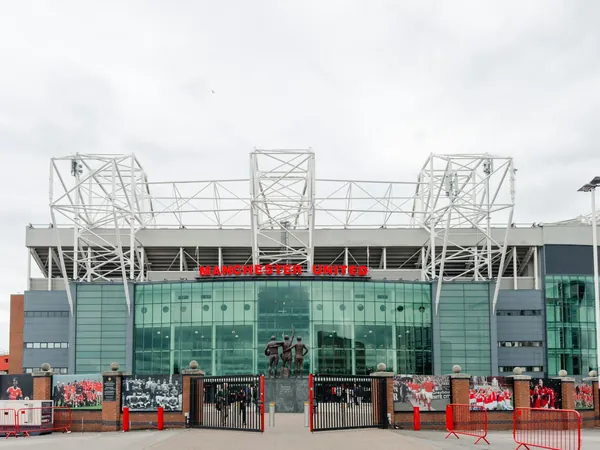
Manchester United's home ground stands on the edge of Trafford Park beside the Bridgewater Canal, and runs a club museum and behind-the-scenes stadium tours on non-match days.
Learn more about Old Trafford Stadium & Museum on Google MapsWe're a new name, so you won't find a wall of reviews here yet. We'd rather show you nothing than make some up.
For a project this size, reviews were never the best evidence anyway. Ask any installer you're considering for a reference site you can visit, a year or more of generation data from a system they fitted, and the grid connection paperwork from a past job. If they can't produce those, keep looking.
The inverter make, roughly how many panels and a few months of readings are enough for a first opinion. If you're not sure who owns the system, tell us that too.